

Last Updated: October 25, 2026
Quick Summary
A portable container shelter livestock solution combines durability, flexibility, and cost-effectiveness by mounting directly onto shipping containers to create covered areas without permanent foundations. These structures offer weather protection while maintaining accessibility and can be reconfigured or relocated as your operation evolves, with hot-dip galvanized steel frames resisting corrosion and fabric covers available in multiple weights for different climates.
- Cattle require roughly 40-60 square feet per head, horses need 80-100 square feet per animal, and sheep and goats shelter in 10-15 square feet per head.
- A 20' × 40' container shelter provides 800 square feet of covered space and starts at $2,999.00.
- Container shelters ventilate well only when modified for airflow with shade, high-level exhaust vents, and a clear open front.
- Hot-dip galvanized steel frames can perform reliably for 15 years or more when properly maintained.
- PE covers typically need replacement every 2-3 years, while treated PVC covers resist UV exposure and weather cycles significantly longer.
Table of Contents
- Why Portable Container Shelters Work for Livestock Operations
- Metal Livestock Shelter Durability and Weather Protection
- Livestock Shelter Ventilation and Moisture Control in Container Designs
- Sizing Your Livestock Shelter for Your Herd
- Livestock Shelter Site Preparation and Installation
- Total Cost of Ownership: Container Shelters vs. Permanent Barns
- Getting Your Custom Portable Shelter Quote
- Frequently Asked Questions
Why Portable Container Shelters Work for Livestock Operations
A portable container shelter livestock solution combines durability, flexibility, and cost-effectiveness that traditional barns often cannot match. These structures mount directly onto shipping containers, creating covered areas without permanent foundations.
Unlike fixed barns, container shelters can be reconfigured or relocated as your operation evolves.
Operations choosing portable container shelters report faster setup, lower upfront costs than permanent construction, and flexibility to adapt layouts without major reinvestment.
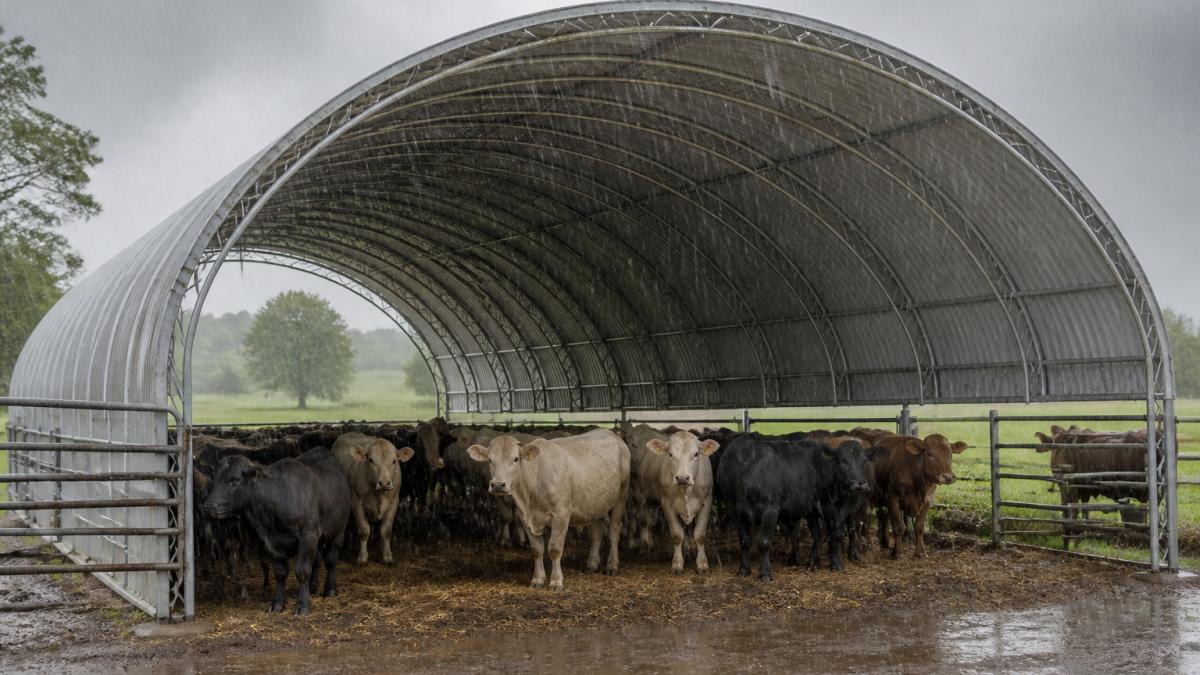
Metal Livestock Shelter Durability and Weather Protection
The durability of a metal livestock shelter hinges on frame construction, cover selection, and anchoring and maintenance.
Weather protection comes in layers. The galvanized frame handles structural loads from wind, snow, and rain.
Treated PVC fabrics include UV-resistant and antifungal additives that extend service life significantly.
Improper tensioning creates loose areas where rain collects and ice builds up, so check and retighten your pipe-and-ratchet system seasonally.
The American Society of Agricultural and Biological Engineers provides guidelines on structural loads for agricultural shelters, helping you verify that your chosen shelter matches your region's wind and snow requirements.
Container-Specific Durability and Conversion Risks
A portable container shelter is only as durable as the containers it mounts to and the modifications made to them. Shipping containers are not livestock buildings out of the box.
- Corten steel and coatings. Most containers use weathering (Corten) steel with a factory paint system that is not automatically safe for livestock that crib, lick, or rub against walls. Confirm any interior coating is low-VOC, lead-free, and rated for agricultural use.
- Sharp edges and protrusions. Cutting door openings, vents, or windows exposes raw edges and metal burrs. Grind and cap every cut, cover exposed corner castings and tie-down rings at animal height, and line the lower 4 feet of interior walls with smooth plywood or rubber matting.
- Flooring and drainage. Container floors are typically 1-1/8 inch plywood over steel crossmembers. Urine and manure will delaminate plywood quickly. Seal floors with an agricultural-grade coating or install rubber mats over a sealed deck, and slope or drain the floor so waste does not pool.
- Door security and escape routes. Container doors are heavy and swing unpredictably. Remove or pin them open during use, provide a separate animal-safe man gate, and confirm latches cannot be opened by livestock rubbing against them.
- Structural changes. Cutting large openings in container side walls reduces stiffness. Reinforce openings with welded or bolted frames, never cut more than the manufacturer's engineering allows, and have a structural engineer review the plan if unsure.
Weather Resistance by Climate
Durability is climate-specific. In hot, humid regions, prioritize UV-stable covers and corrosion protection on cut edges. In cold and snow regions, prioritize frame load ratings and cover tension. In coastal or high-wind areas, anchoring and salt-air corrosion control matter more than cover weight. Match the frame and cover to your climate zone rather than buying the heaviest option by default.
Livestock Shelter Ventilation and Moisture Control in Container Designs
Ventilation is where many portable container shelters outperform traditional barns, but only when designed correctly.
Container-mounted shelters have a structural advantage: the containers create an elevated platform that promotes air circulation underneath and around the structure, so moisture drains away naturally and bedding stays drier longer. Best Ways to Combine Livestock and Storage explores how container shelters can serve dual purposes, livestock protection and equipment storage in one structure, maximizing your investment per square foot.
The closed rear panel reduces direct wind exposure while maintaining open-front ventilation, protecting animals from driving rain and extreme wind on one side while air flows freely on the other.
In container designs, condensation can form on interior metal frames during temperature swings.
The University of Minnesota Extension livestock housing guidelines documents how ventilation directly impacts animal health outcomes, including reduced respiratory disease and improved feed efficiency.
The Container Ventilation Problem Nobody Talks About
A shipping container is a sealed steel box, excellent for cargo, terrible for livestock if left unmodified. Two failure modes show up repeatedly:
- Heat trapping. Steel walls absorb solar gain and radiate it inward, so an unshaded, uninsulated container can run substantially hotter inside than outside air on a sunny day, dangerous for cattle, horses, and sheep. Shade the roof and sun-facing wall, add ridge or gable vents and high-wall vents to let hot air escape, and keep the open front unobstructed so cooler air enters low.
- Condensation and moisture. Metal surfaces colder than the dew point collect water, causing dripping ceilings, damp bedding, and rust at fasteners. Control it with continuous air exchange, no sealed interior spaces, and keeping bedding and animals off bare steel. If you insulate, use a closed-cell or foil-faced product with a sealed vapor barrier on the warm side.
Practical Airflow Design for Container Shelters
- Inlet low, outlet high. Fresh air should enter at animal height along the open front and exit at the roof's highest point. High vents or a ridge vent do more for heat removal than any fan.
- Cross-flow, not dead corners. Position partitions and feed bunks so they don't block airflow to the rear. Keep the center bay clear and place storage or tack areas along the closed wall.
- Mechanical backup for still days. Passive ventilation stalls in summer heat and tightly built conversions. A high-volume low-speed (HVLS) fan or circulation fans sized to the shelter volume provide a safety margin during heat events.
- Monitor ammonia and humidity. If you smell ammonia at animal height, ventilation is inadequate. A cheap hygrometer and a daily walk-through catch moisture problems before they become respiratory problems.
Species and Climate Notes
Cattle and sheep tolerate cold well but struggle with heat and humidity, so summer airflow and shade matter most. Horses are sensitive to dust and ammonia, so bedding management and ventilation go together. Goats handle heat better but dislike drafts and wet bedding. In hot, humid climates, prioritize shade, high vents, and fans; in cold climates, control condensation and avoid sealed, unventilated enclosures.
Sizing Your Livestock Shelter for Your Herd
Getting shelter size right is fundamental. Undersized shelters create overcrowding, poor ventilation, and stress; oversized shelters waste money. The calculation depends on species, size, and intended use.
Cattle require roughly 40-60 square feet per head, depending on breed and size. Horses need 80-100 square feet per animal. Sheep and goats shelter in 10-15 square feet per head.
20' × 20' Heavy-Duty Livestock Corral Shelter with Front Door →
A 20' × 20' shelter provides 400 square feet, enough for roughly 6-8 cattle in a protection-focused design, or 25-40 sheep. A 20' × 40' shelter doubles that to 800 square feet, accommodating 12-16 cattle or 50-80 sheep. The Custom Livestock Barn Size Guide provides detailed calculations based on your specific herd composition and how you intend to use the space, including site preparation considerations that affect final sizing.
The real mistake isn't picking a size slightly too large or small, it's not accounting for future growth. Size the shelter to your target herd numbers, not your current count, since starting with adequate space prevents costly retrofits.
Livestock Shelter Site Preparation and Installation
Site preparation determines whether your portable container shelter performs as designed or becomes a maintenance headache.
Select a location with natural drainage and avoid low spots where runoff collects.
Soil conditions matter more than most expect. Sandy or gravelly soil drains well but may not provide stable footing for loaded containers; clay provides stability but traps water.
Wind exposure is another critical factor.
The Get a Quote for Custom Barn article walks through the quote process and explains how site-specific factors influence your shelter design.
Total Cost of Ownership: Container Shelters vs. Permanent Barns
The upfront cost difference between a portable container shelter and a permanent barn is dramatic.
Consider a 20' × 40' shelter comparison. Flint Hills Barns offers a 20' × 40' Dome Container Shelter starting at $2,999.00, which creates 800 square feet of covered space.
Ongoing maintenance differs too. Permanent barns require regular roof inspections, gutter cleaning, and structural repairs that accumulate over years.
Relocation flexibility has real financial value.
Getting Your Custom Portable Shelter Quote
The quote process for a custom portable container shelter should be straightforward and transparent.
Start by identifying your shelter size and cover type.
Bobby Payne and our team provide personalized quote assistance, confirming ZIP-code specific availability through our regional manufacturing partnerships.
The Get a Quote for Custom Barn process explains exactly what happens next, from design confirmation through delivery and installation support.
| Shelter Option | Covered Area | Starting Price | Best For |
|---|---|---|---|
| 20' × 20' Corral Shelter | 400 sq. ft. | $2,999.00 | Small herds, corrals, paddocks |
| 20' × 20' Container Shelter | 400 sq. ft. | $2,199.00 | Compact livestock + storage |
| 20' × 40' Container Shelter | 800 sq. ft. | $2,999.00 | Medium herds, mixed use |
| 20' × 40' Double-Truss | 800 sq. ft. | $4,599.00 | Heavy snow/wind regions |
| 40' × 40' Container Shelter | 1,600 sq. ft. | $8,699.00 | Large operations, machinery storage |
Choosing a portable container shelter for livestock means prioritizing flexibility, durability, and transparent pricing. The structures deliver real performance in diverse climates and scales.
Frequently Asked Questions
What should a portable container shelter provide for livestock?
A portable container shelter should provide protection from wind, rain, snow, and extreme heat while maintaining proper ventilation to prevent moisture buildup and condensation. It must be sized appropriately for your herd, include adequate headroom for animal movement, and use durable materials like hot-dip galvanized steel. The shelter should also allow easy access for feeding, cleaning, and animal management, with secure anchoring to prevent movement in high winds.
How do you ventilate a livestock shelter?
Container shelters rely on open or partially enclosed designs to allow natural airflow. The dome or arch structure creates space at the sides and top for air circulation, while a closed rear panel reduces direct wind exposure without trapping moisture. Proper spacing between containers and the shelter frame, combined with regular cover maintenance and prompt snow removal, prevents condensation accumulation. Avoid fully enclosed designs that restrict airflow, as trapped moisture promotes respiratory disease and bedding deterioration.
Can a portable livestock shelter be moved or relocated?
Yes, portable container shelters can be relocated, though the process requires planning. The shelter frame uses twist-lock and clamp connections to mount on shipping containers, allowing the cover and frame to be removed and reinstalled on new containers at a different location. However, relocation involves disassembly, transport, reinstallation, and potential re-anchoring costs. Most farmers keep shelters in place long-term, but portability offers flexibility if your herd location or operation layout changes.
Are portable livestock shelters suitable for year-round use?
Portable container shelters work year-round when properly maintained and sized for your climate. In cold regions, heavier PVC covers (up to 900 GSM) provide better insulation and snow resistance than lightweight PE options. You must remove accumulated snow promptly to prevent sagging and cover damage. In hot climates, the dome design allows airflow to prevent heat stress. The key is selecting the right cover weight for your region and performing regular maintenance, inspecting cover tension, ratchets, and frame connections after temperature changes and severe weather.
