

Last Updated: November 24, 2026
Quick Summary
Choose a farm storage container with multiple doors by matching the door layout to your largest regular machine and daily traffic pattern. Double end doors create drive-through access, side doors suit pallet loading and tight sites, and end plus side doors handle mixed loads. Confirm door opening height and width, not interior dimensions, before you order.
- Score each door layout against your largest machine, existing lanes, item sizes and door swing blockers.
- Add 6 to 12 inches of margin on each side of the door opening for steering error.
- A 20-foot unit fits tighter sites and shorter equipment, while a 40-foot unit gives length for long implements.
- Budget annual inspection and lubrication of locking bars and hinges, plus door seal replacement.
- Every additional door adds a locking point, so security cost scales with door count.
Table of Contents
- Why Door Count Decides Which Farm Storage Container You Buy
- Double-Door Shipping Containers and Other Multi-Door Types
- Shipping Container Door Placement: End Doors, Side Doors and Drive-Through
- 20-Foot vs. 40-Foot Shipping Containers: Matching Size to Your Equipment
- Door Clearance and Equipment Fit: The Measurement Checklist
- Long-Term Farm Storage: Weather, Condensation and Crop Inputs
- What a Multi-Door Container Really Costs Over Its Life
- Get a Written Quote for a Multi-Door Storage Structure
- Frequently Asked Questions
Why Door Count Decides Which Farm Storage Container You Buy
Door count is the first decision that locks in everything else about a farm storage container: how fast equipment loads, whether a combine can drive through, and how much of your season you lose to shuffling implements around. Farmers often buy on price and size, then discover the door layout does not fit the machine that matters most.
Most buyers treat doors as an afterthought. That is backwards: the wrong door configuration is a shed you fight with twice a day for a decade, while the right one turns a steel box into a workflow tool.
Below, we walk through the door types, the measurements that decide fit, and the cost picture over the life of the structure.
Double-Door Shipping Containers and Other Multi-Door Types
Double-door shipping containers are standard steel containers fitted with cargo doors at both ends, allowing a straight path through the unit. A multi-door container adds side openings or a combination of end and side doors, so you can reach cargo from more than one direction.
The common configurations break down like this:
- Tunnel box: cargo doors on both ends, open straight through
- Side-door container: locking cargo doors cut into one or both long walls
- Open-side container: a wide side opening instead of a narrow door
- Combination units: end doors plus side access for cross-loading
Side doors help when the container sits against a fence line or another structure and you cannot open an end.
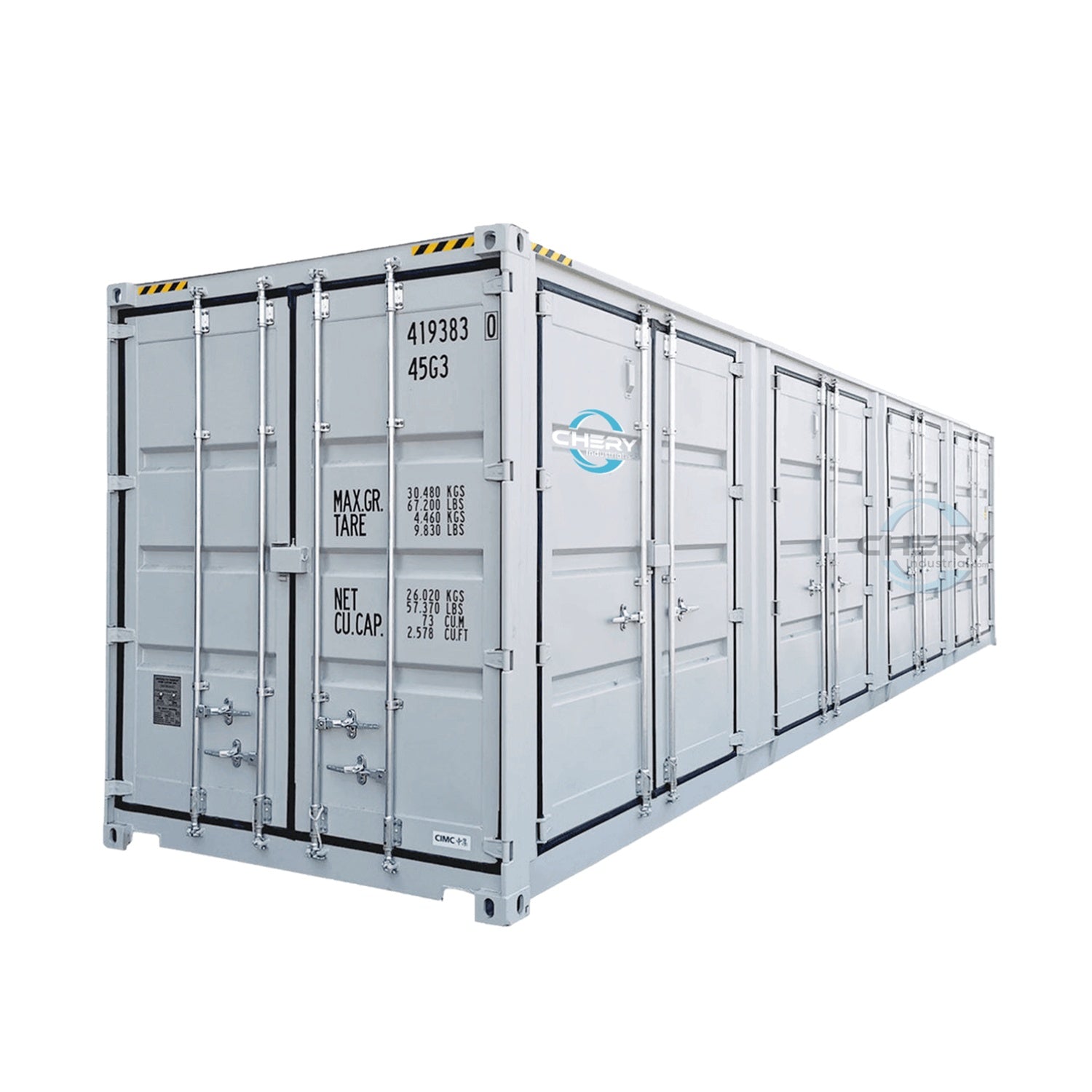
If you want to see how a real multi-door unit is built, look at this 40ft high cube container with four side doors or this 40ft high cube two multi-door container. Both show how door placement changes what you can load and how you organize the interior.
Shipping Container Door Placement: End Doors, Side Doors and Drive-Through
Placement matters more than count. Two end doors create a drive-through lane; two side doors create a loading bay; one of each gives options but eats wall space. On a farm, your daily traffic pattern sets the right answer, not the shape of the container.
Use this farm-specific framework before you commit. Score each option against the four questions below and pick the layout that wins on the two that matter most.
1. What is the largest machine that must enter, and how often?
If a tractor, skid steer, or combine enters daily during harvest, a drive-through tunnel box with end doors at both ends is usually the only layout that avoids backing out under load.
2. Where does the machine already drive?
Put the primary door on the side facing your existing lane, apron, or gravel pad. A door that requires a new driveway or a turn through soft ground will be used less than you expect.
3. How often do you retrieve small items versus large ones?
4. What blocks the door swing?
Avoid placing a side door where a fence, ditch, feed bunk, or another structure blocks the swing and locking bars.
Configuration trade-offs at a glance
- Double end doors (tunnel box): best for drive-through equipment access and long material; needs clear space at both ends and a straight lane through the site.
- Side door only: best for pallet loading, tight sites, and walk-in access to frequently used supplies; limited drive-through use and more wall space consumed.
- End plus side doors: best for mixed loads and cross-access; higher cost and more seals, hinges, and locking bars to maintain.
- Multiple side doors: best for compartmentalized storage along one wall; each opening adds a seal and a potential leak point.
End doors on a tunnel box also improve airflow, which matters for anything that traps moisture.
Security and placement interact. Every additional door is another locking point and another seal to inspect.
Watch out: buyers often choose door placement from a photo or floor plan without walking the site.
If you want to see how a real multi-door unit is built, look at this 40ft high cube container with four side doors or this 40ft high cube two multi-door container. Both show how door placement changes what you can load and how you organize the interior.
20-Foot vs. 40-Foot Shipping Containers: Matching Size to Your Equipment
The 20-foot vs. 40-foot shipping container choice comes down to what you store and how you move it. A 20-foot unit fits tighter sites and shorter equipment. A 40-foot unit gives you length for long implements and multiple storage zones.
Length is only half the equation. Interior height and door opening size decide whether a machine actually fits. A high-cube container adds headroom for tall equipment or stacked pallets; our guide on whether high-cube shipping containers are worth it for farm storage walks through the trade-offs.
Match the container to your largest regular load, not your average one. Buy for the combine, the planter, or the hay trailer, and let the smaller implements fit around them.
| Door Configuration | Best For | Watch Out For |
|---|---|---|
| Single end door | Small tools, feed, seed | Slow loading of long items |
| Double end doors | Drive-through equipment access | Needs clear space at both ends |
| Side door only | Pallet loading, tight sites | Limited drive-through use |
| End plus side doors | Mixed loads, cross-access | Higher cost, more seals to maintain |
Door Clearance and Equipment Fit: The Measurement Checklist
Door clearance sinks more purchases than any other measurement. Measure your tallest and widest machine, then add margin for mirrors, exhaust stacks, and attachments.
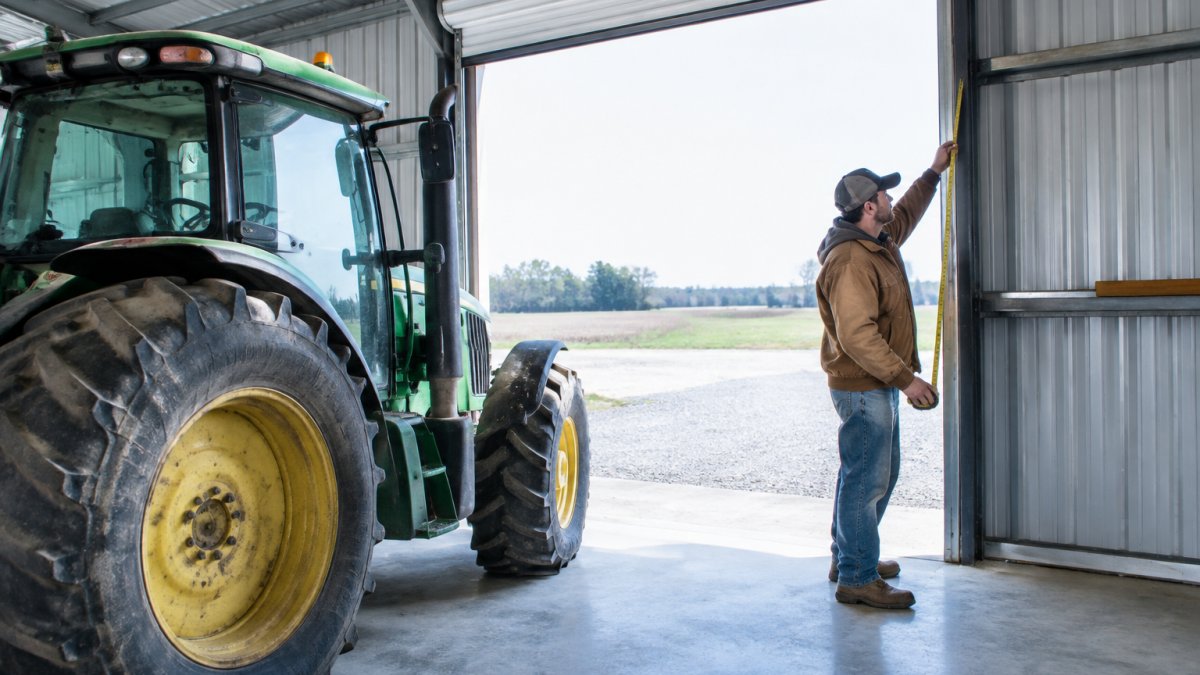
Run this checklist before you commit:
- Measure machine height with the tallest attachment fitted
- Measure width including mirrors and folded implements
- Add 6 to 12 inches of margin on each side for steering error
- Confirm the door opening height, not the interior height
- Check the approach apron slope and surface
- Confirm turning radius inside the structure
- Verify locking bar and hinge clearance does not narrow the opening
Watch out: buyers often compare interior dimensions and ignore the door frame. A container can have plenty of room inside and still stop your tractor at the threshold.
Long-Term Farm Storage: Weather, Condensation and Crop Inputs
Steel containers keep rain and wind out, but condensation is the quiet problem. Temperature swings between day and night pull moisture onto cold steel, and that moisture finds fertilizer, seed bags, and tools.
Ventilation and a raised floor help. So does keeping organic material out and storing inputs off the bare steel. For long-term farm storage, plan airflow before you fill the unit, not after.
Our broader guide on choosing metal structures for farms covers how structure type, roofing, and siting affect durability over the years. The same principles apply whether you buy a container or a purpose-built metal building.
What a Multi-Door Container Really Costs Over Its Life
Purchase price is the smallest part of total cost of ownership. A multi-door container costs more up front than a single-door unit because of extra steel, hinges, seals, and locking hardware, but that premium buys faster loading, less equipment shuffling, and fewer damaged goods.
Build your total-cost-of-ownership estimate from these line items. Ask every seller to quote them separately so you can compare like with like.
1. Container purchase or rental
2. Delivery and placement
3. Site preparation
A container needs a level, drained base. Gravel, compacted crushed stone, or a concrete pad all work; cost scales with pad size and site slope. Skipping site prep shows up later as racked doors, misaligned locking bars, and a unit that will not latch, repairs that cost more than the pad would have.
4. Modifications and door hardware
5. Maintenance
Door hardware wears first because it moves. Budget for annual inspection and lubrication of locking bars and hinges, touch-up paint at door frames and floor edges, and replacement of door seals as they compress and crack. A container on soft ground may also need re-leveling if the base settles.
6. Security
Every door is a locking point. Budget for a lock box or shrouded padlock on each opening, and consider a tamper-evident seal for high-value inputs. Security cost scales with door count, so factor it into the configuration decision rather than treating it as an afterthought.
7. Resale or salvage value
Steel containers hold residual value.
The comparison that matters
Compare the multi-door total against the cost of a second structure or a rented unit you need because the first one loads too slowly.
Watch out: a low purchase price with vague delivery and site-prep terms often ends up costing more than a higher quote that lists every line item. Ask for the full breakdown in writing before you compare two sellers.
Get a Written Quote for a Multi-Door Storage Structure
A written quote removes the guesswork. It should list the structure, the door configuration, delivery terms, and any site requirements, so you can see exactly what you are buying.
Flint Hills Barns is a veteran-owned business, and we help farmers and ranchers sort through exactly this decision. Bobby Payne handles personalized quote assistance, and we confirm ZIP-code specific availability through our regional manufacturing partnerships before you commit. You can choose a container size, condition, and delivery or pickup preference and get a clear freight quote in return.
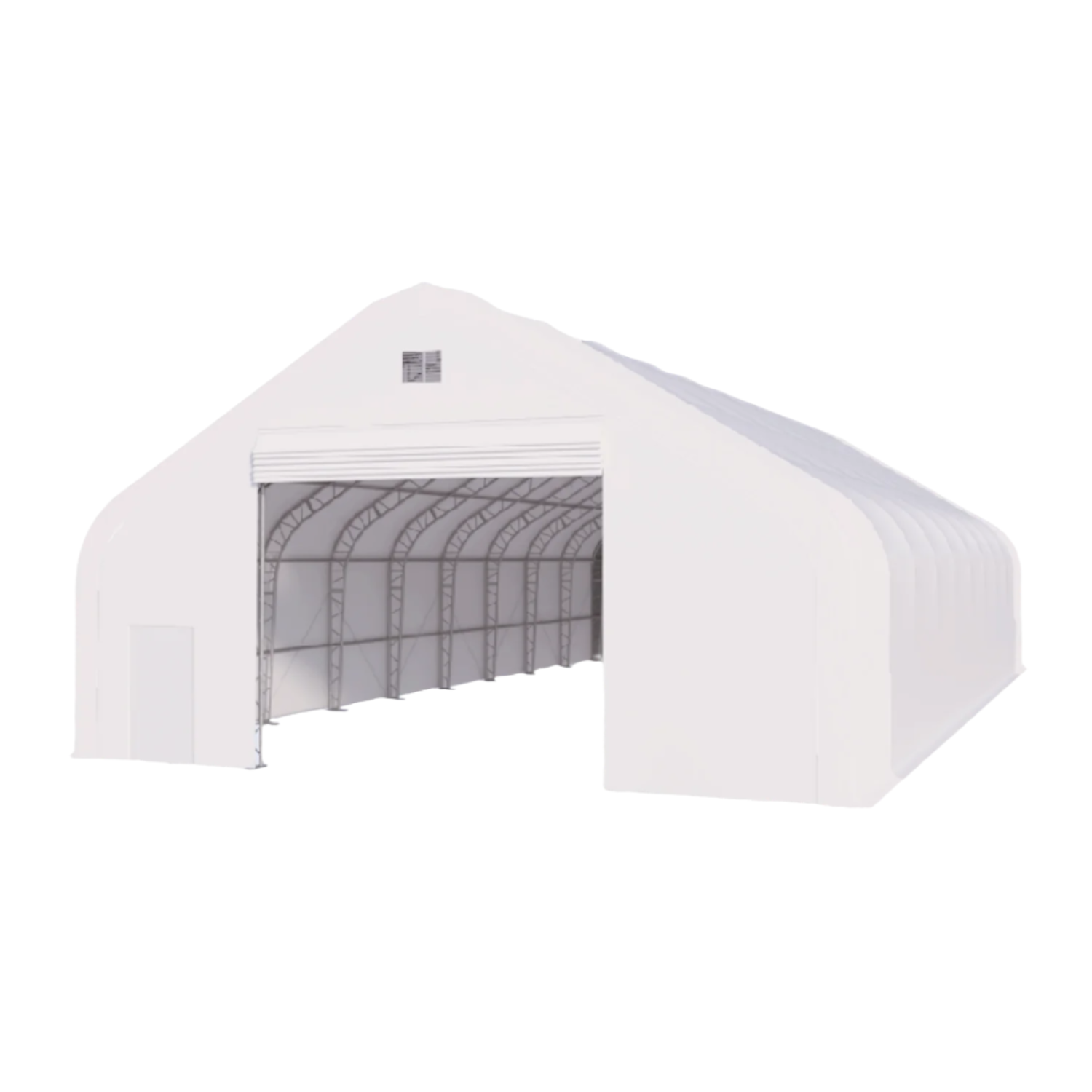
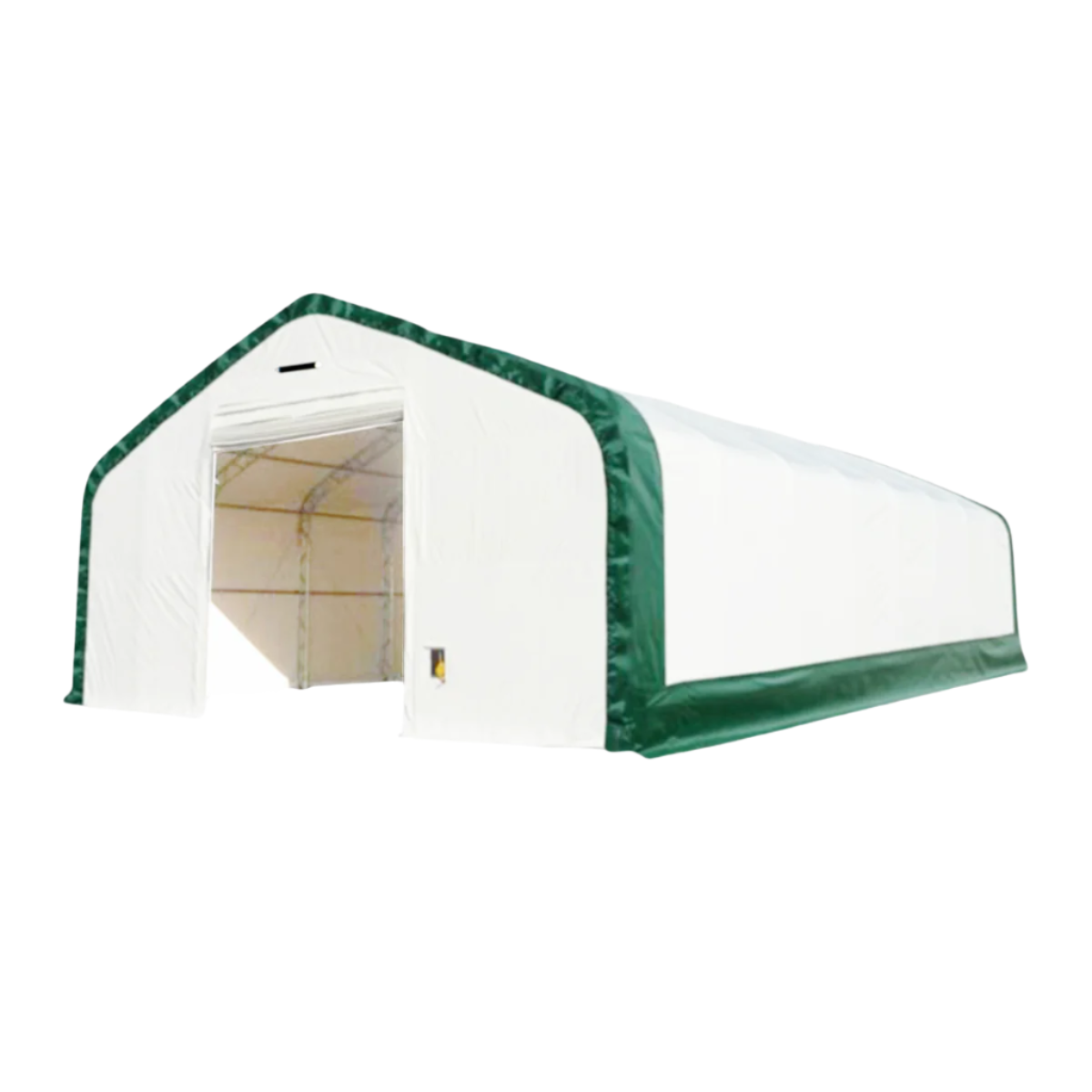
If a fabric structure fits your operation better than a steel box, our Gold Mountain shelters offer drive-through access with dual roll-up doors. The 20' × 40' × 16' model gives roughly 800 square feet with 12-by-10-foot openings at both ends for $5,799.00. The 50' × 80' × 23' shelter opens up about 4,000 square feet with 18-by-16-foot doors for $25,990.00. Both use hot-dip galvanized steel frames and your choice of PE or heavy-duty PVC covering.
The hardest part of buying a multi-door container is not the steel. It is matching the door layout to the machine you run every day. Measure first, then let us help you confirm what is available in your area and what it will cost delivered.
Get started with Flint Hills Barns and request personal quote help for a structure sized to your equipment and your land.
Frequently Asked Questions
Is it cheaper to build a shed or buy a shipping container for farm storage?
It depends on how much clear span and door width you need. A used steel container is often cheaper up front, A fabric-covered steel-frame shelter such as the Gold Mountain 20' x 40' x 16' Double-Truss Storage Shelter at $5,799.00 delivers about 800 square feet with 12-by-10-foot dual roll-up doors. Price both against the equipment you actually need to drive in, not just the footprint.
Do 40-foot containers have doors on both ends?
If drive-through access is the goal, compare purpose-built shelters with roll-up doors at both ends, such as the Gold Mountain Double-Truss Storage Shelters.
What should I check before buying a used farm storage container?
Inspect the steel doors first: check that locking bars move freely, the gaskets seal, and the lock box is intact. Look for rust along the floor rails and roof seams, and confirm the unit is cargo-worthy rather than wind-and-watertight only. Ask for the container grade in writing, check the certification plate, and verify the door opening measurements against your tallest implement. A used container with a bent door frame will leak and be hard to secure.
How should I choose door placement for farm equipment storage?
Start with how you move equipment, not with the container layout. Measure your widest machine, add a foot of clearance on each side, and confirm the door opening meets that number before you commit to any shipping container door placement.
