

Last Updated: November 7, 2026
Quick Summary
The best metal roofing colors for rural farm buildings are traditional barn red, hunter or ivy green, dark brown, and white or cream. Light colors reflect more sun and keep buildings cooler, while dark colors absorb heat and show fading more visibly.
- Light roofs reflect more sunlight and keep surface temperatures lower during summer days.
- Dark colors like charcoal and black show fading and chalking most visibly over time.
- Siliconized polyester and PVDF finishes generally retain color longer than standard polyester.
- Ventilation and insulation often affect interior temperature more than roof color alone.
- Wash painted roofs with mild soap and a soft brush; avoid pressure washing that can strip the finish.
Table of Contents
- Why Roof Color Matters More on a Farm Building
- Traditional Rural Colors: Barn Red, Green, Brown and White
- Metal Roof Colors for Heat: Light Versus Dark Roofs
- Metal Roof Color Combinations for Barns: Matching Siding, Trim and Doors
- Metal Roof Colors That Fade the Least and How to Maintain Them
- Choosing Colors by Climate, Building Use and Glare Concerns
- Using a Metal Building Color Visualizer and Viewing Samples Before You Order
- Planning Your Roof Color With Flint Hills Barns
- Frequently Asked Questions
Choosing the right metal roofing colors is one of the few building decisions you make once and live with for decades. Plan a metal barn or livestock shelter with Bobby, request a quote for your layout, access and animal needs.
This guide covers the metal roofing colors that suit rural farm buildings, how color affects heat and fading, which combinations work with siding and trim, and how to test your choices before you order.
Why Roof Color Matters More on a Farm Building
A farm building takes more abuse than a typical garage. It shelters livestock, equipment and feed, and it sits exposed to sun, wind, dust and heavy snow. The roof is the largest single surface on most of these structures, so its color has an outsized effect on how the whole building performs.
Three factors make roof color especially important on a farm:
- Heat load. Dark roofs absorb more solar energy than light ones, and that heat transfers into the building below.
- Finish durability. Some colors hold their appearance far longer than others over a twenty-year-plus lifespan.
- Visibility. A bright or unusual roof can be seen from a long distance, affecting how the property looks to neighbors and passing traffic.
Traditional Rural Colors: Barn Red, Green, Brown and White
Most rural buildings in the Midwest and South follow colors that have worked for generations. These palettes remain the safest starting point for many owners.
- Barn Red. The classic choice. It pairs well with white trim and suits both traditional and modern agricultural buildings.
- Ivy or Hunter Green. A deep green roof reads as established and blends well into wooded or pasture settings.
- Dark Brown. A subdued option that hides dirt and dust well and works with earth-toned surroundings.
Traditional colors often match what neighbors already have. You can browse finished barns and stables to see these palettes on real buildings.
Metal Roof Colors for Heat: Light Versus Dark Roofs
Roof color changes how much heat reaches the building interior, which matters most for buildings housing livestock or stored feed. Light-colored roofs reflect more sunlight; dark roofs absorb it.
Some practical points to weigh:
- Light colors such as white, cream and light gray keep surface temperatures lower during summer days.
- Dark colors such as charcoal, black and deep green absorb more heat, which can raise interior temperatures if ventilation is limited.
- In cold climates, heat gain from a dark roof can be a winter benefit, so the trade-off depends on your region.
Ventilation and insulation often have a larger effect on interior temperature than roof color alone. Plan both together rather than relying on color by itself. A deeper guide to planning rural metal livestock shelters covers these trade-offs in more detail.
How Roof Color Affects Heat Absorption in Livestock and Storage Buildings
Livestock buildings need stable conditions, and a heat-absorbing roof can push interior temperatures up quickly on hot afternoons. Storage buildings face a different concern: heat can affect equipment, fuel and stored materials. A lighter roof usually keeps these spaces cooler, but only when paired with adequate airflow. If your building houses animals in summer, consider how roof color, ridge ventilation and eave openings work together.
Metal Roof Color Combinations for Barns: Matching Siding, Trim and Doors
The roof rarely stands alone. Siding, trim and doors shape how the whole building reads. Most successful farm buildings use one of three approaches:
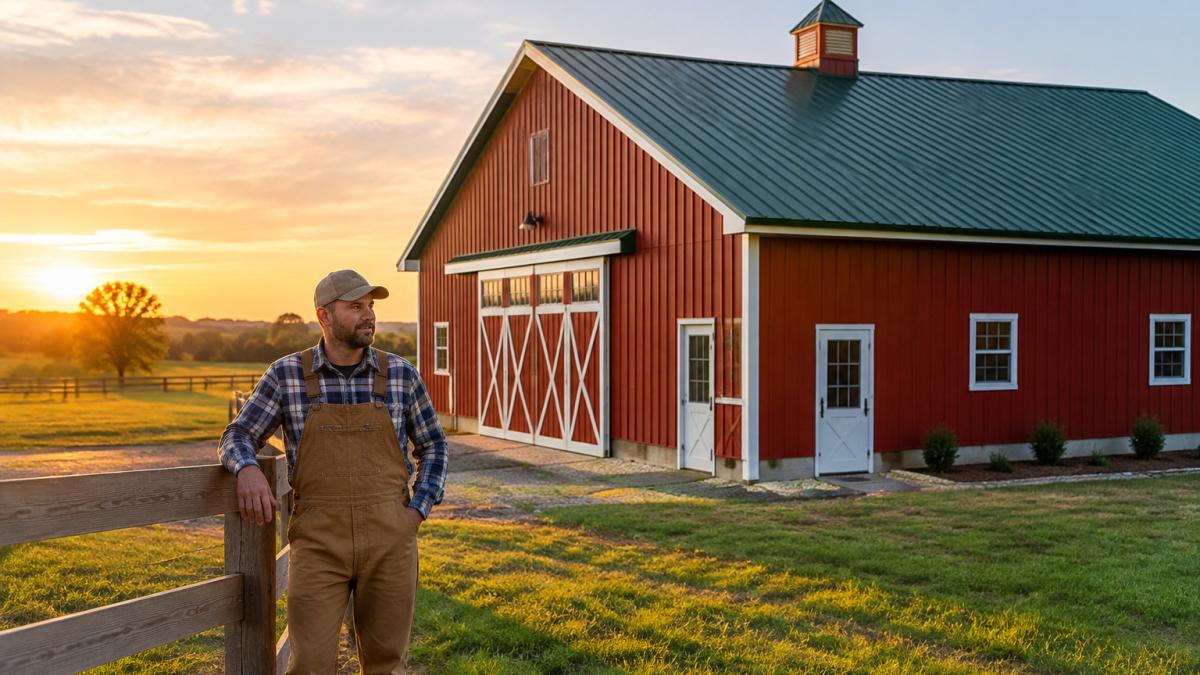
- Classic contrast. Red siding, a dark green or charcoal roof, and white trim.
- Monochrome. Siding and roof in closely related tones, with trim and doors one shade darker for definition.
- Earth tones. Brown or tan siding with a dark brown roof and cream trim.
Testing combinations on the actual building material when possible is helpful, since colors that look balanced on a screen can shift under real sunlight. For a dedicated comparison, see choosing metal siding for barns.
Metal Roof Colors That Fade the Least and How to Maintain Them
Fading and chalking are the two appearance problems farm owners notice first, and both depend more on the finish system than on the color alone.
How metal roof finishes age
Most painted metal roofing uses a factory-applied coating system: a pretreatment, a primer, and a topcoat of polyester, siliconized polyester, or a fluoropolymer such as PVDF (polyvinylidene fluoride).
- Standard polyester finishes are common on agricultural and budget metal roofing. They perform well for many years but tend to chalk and fade sooner in high-UV regions.
- Siliconized polyester offers better color retention than standard polyester and is a common upgrade for farm buildings expected to last decades.
- Fluoropolymer (PVDF) finishes generally provide the best long-term color and chalk resistance, which is why they are common on architectural and commercial metal roofs. They cost more upfront.
Color interacts with finish predictably. Dark, saturated colors such as charcoal, black, deep red and forest green show fading and chalking more visibly because the contrast between faded and unfaded areas is greater.
Color-by-color expectations
| Color family | Fading visibility | Chalking visibility | Dirt and streaking | Notes |
|---|---|---|---|---|
| White, cream, light gray | Low | Low to moderate | High | Hides fade but shows dust, pollen and roof runoff |
| Barn red | Moderate | Moderate | Moderate | Classic look; choose a quality finish to slow fade |
| Forest or hunter green | Moderate to high | Moderate | Moderate | Dark saturated tones show fade sooner |
| Brown, tan, bronze | Low to moderate | Low to moderate | Moderate | Earth tones hide dust well |
| Charcoal, black | High | High | Low to moderate | Shows fade and chalk most; can look chalky within years in high-UV areas |
Two roofs installed the same year in the same region will age differently if one uses standard polyester and the other siliconized polyester or PVDF. Finish quality often matters more than the color itself.
What to check before you buy
- Ask for the manufacturer's color-retention warranty and read what it actually covers. Many warranties prorate coverage and exclude chalk or fade below a stated threshold.
- Confirm the finish type (polyester, siliconized polyester, or PVDF) rather than relying on a color name alone.
- Check whether the warranty requires specific maintenance or excludes certain environments, such as coastal or heavy industrial areas.
Maintenance that actually preserves appearance
- Inspect the roof at least twice a year, in spring and fall, looking for dirt buildup, scratches, loose fasteners and debris in valleys.
- Wash with mild soap and water using a soft brush; avoid abrasive cleaners and pressure washing that can damage the finish.
- Rinse off bird droppings and tree sap promptly, since both can stain the coating.
- Touch up scratches with the manufacturer's recommended touch-up paint to prevent corrosion at the exposed metal.
- Keep tree limbs trimmed back so debris does not trap moisture against the panels.
Watch out: pressure washing a painted metal roof can force water behind panels and strip the finish. Use low pressure and a soft brush instead.
Regular cleaning and prompt repairs help preserve the appearance of any color, and choosing a finish rated for your climate is an important starting point. To learn more, see customizing metal barns for livestock storage durability.
Choosing Colors by Climate, Building Use and Glare Concerns
Most color guides stop at "light roofs are cooler." On a working farm, the better question is which color fits this building, in this climate, doing this job. A livestock barn, an equipment shed, a workshop and an occupied space each put different demands on a roof. Use the matrix below as a starting framework, then adjust for your site.
Color direction by climate and building use
| Building use | Hot, sunny climate | Cold, snowy climate | Humid or mixed climate |
|---|---|---|---|
| Livestock barn | Light gray, white, or light tan to limit solar heat gain; pair with ridge and eave ventilation | Medium tones such as barn red or brown for winter heat gain without extreme summer load | Light to medium green or gray; prioritize ventilation over color alone |
| Equipment or machine shed | Light gray or white to keep interior temperatures down and reduce heat stress on fuel and tires | Dark brown or charcoal is acceptable if the building is unoccupied and ventilation is adequate | Medium brown or green; watch for condensation and choose a finish with good corrosion resistance |
| Workshop or occupied space | White, cream, or light gray with insulation and ventilation | Darker tones can supplement winter heat gain, but only with insulation | Light neutral tones; pair with soffit and ridge ventilation |
| Hay, feed, or commodity storage | Light colors to reduce heat buildup that can degrade feed quality | Medium tones; ensure airflow to manage moisture | Light to medium tones; moisture control matters more than color |
A few patterns hold across most of the country. In hot, humid regions, light roofs reduce surface temperature, but humidity makes ventilation and condensation control more important than color alone. In cold, snowy regions, darker roofs can shed snow faster when sun hits them, but the same dark roof can create ice damming at the eaves if attic ventilation is poor.
Glare, visibility and safety
Glare is the factor most farm owners overlook. A bright white or highly reflective roof can be visible for a mile or more, and near a road, driveway, or work yard it can create glare that affects drivers, equipment operators and even livestock moving through chutes.
- Near public roads or shared driveways, medium-toned roofs (barn red, green, brown, light gray) reduce glare while keeping the building visible.
- Near airstrips or where small aircraft operate, avoid highly reflective white or silver roofs that can distract pilots.
- On large equipment sheds, a light gray or white roof can improve visibility inside during daytime work by reflecting more light through skylights and openings.
Watch out: a roof color that looks good on a single building can create glare or visual clutter when repeated across several large structures near a road. Evaluate the whole property, not just one building.
A quick decision sequence
- Identify the building's primary use and whether it is occupied, animal-occupied, or storage-only.
- Note your summer high and winter low patterns, plus snow load and humidity.
- Check proximity to roads, property lines, and any flight paths.
- Choose a light, medium, or dark tone based on heat and glare, then pick a specific color from the traditional or modern palette.
- Confirm ventilation and insulation plans before finalizing color, since those systems often matter more than the roof shade.
Using a Metal Building Color Visualizer and Viewing Samples Before You Order
Color visualizers help you see combinations on a rendered building before you commit and are useful for comparing roof, siding and trim together.
Order physical color samples whenever possible and view them where the building will stand, in morning and afternoon light, next to your existing buildings, and from the distance a neighbor or delivery driver would see the property.
Planning Your Roof Color With Flint Hills Barns
Choosing a roof color is easier when the rest of the building plan is clear. Flint Hills Barns works with rural property owners to match the structure to the land, the animals and the equipment it needs to hold. We are a veteran-owned business, and we provide personalized quote assistance from Bobby Payne, who can talk through your layout, access needs and regional availability with you directly.
Frequently Asked Questions
What is the most popular color for metal roofs on farm buildings?
Charcoal, dark brown, ivy green and Barn Red are among the most common choices for rural farm buildings, largely because they suit traditional barn designs and hide dust and dirt well. Lighter shades such as white, cream and pebble beige are also popular on machine sheds and livestock shelters where cooling matters. Popularity depends on region and on what the building's neighbors look like, so checking local styles and your existing siding before choosing is a practical step. Flint Hills Barns can help you narrow options for your land and building use.
Do lighter metal roof colors keep farm buildings cooler?
Lighter metal roof colors generally reflect more sunlight than dark ones, which can lower roof surface temperatures and reduce heat transfer into the building on hot days. The difference is most noticeable in sunny climates and in buildings with no insulation or ceiling. Dark roofs can still be a sound choice where heat is less of a concern or where a coordinated traditional look is the priority. Exact temperature differences vary by panel finish, climate and ventilation, so ask for guidance specific to your structure.
Which metal roof color fades the least?
Lighter colors and high-quality factory-applied coatings tend to show less visible fading over time, and fine chalking on some finishes can make darker colors look dull sooner. Fading resistance depends heavily on the coating system and warranty terms rather than color alone, so compare finish specifications along with color. Regular cleaning removes dirt and chalk residue that can make any roof look faded. Ask about the coating and warranty when requesting a written quote.
What metal roof colors work best with red barn siding?
Charcoal, dark gray and black are common pairings with Barn Red siding because they provide strong contrast without competing with the wall color. Dark green or brown roofs suit a more traditional, heritage look. White or cream trim helps tie the roof and siding together. Testing a few combinations with a color visualizer or physical samples before ordering can help confirm the match.
