

Table of Contents
- Why Transparent Written Quotes Matter for Agricultural Workshops
- What Should Be Included in a Metal Building Quote
- How to Compare Metal Building Quotes Accurately
- Questions to Ask Metal Building Manufacturers
- Agricultural Steel Building Cost Breakdown
- Red Flags in Metal Building Quotes
- Getting a Clear Quote From a Trusted Supplier
- Frequently Asked Questions
Last Updated: September 20, 2026
Why Transparent Written Quotes Matter for Agricultural Workshops
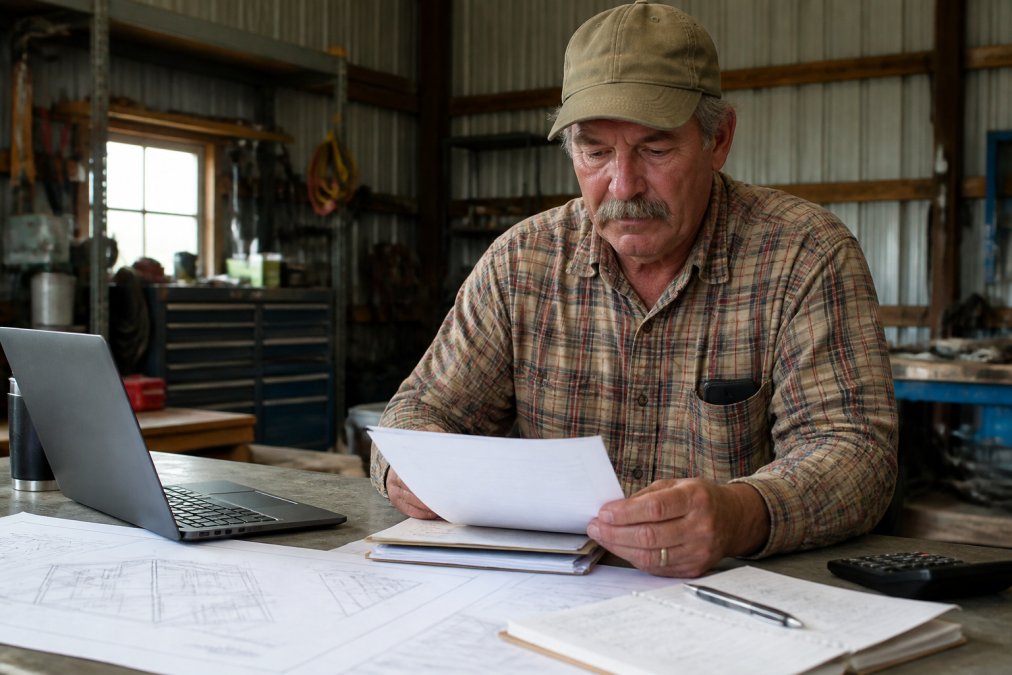
When you're planning to build an agricultural workshop, you need to understand what you're actually paying for. A transparent written quote lays out every component, every cost, and every specification so there's no confusion later. Without this clarity, you risk getting blindsided by unexpected expenses or discovering that what was promised verbally doesn't match the final bill.
Metal building suppliers transparent quotes give you the foundation for making a real decision. You can compare apples to apples across different suppliers, understand where your money goes, and plan your budget with confidence. This matters especially for agricultural operations where cash flow timing is critical and surprises can derail your entire season.
Flint Hills Barns specializes in providing exactly this kind of clarity. As a veteran-owned business, we've built our reputation on straightforward communication and written proposals that spell out every detail. When you request a quote from us, you get a comprehensive breakdown that accounts for your specific site conditions, your exact building dimensions, and your regional requirements.
The difference between a vague estimate and a detailed written quote is the difference between guessing and knowing. A proper quote tells you the delivery timeline, the erection costs, and what's included in the warranty. It removes ambiguity and puts you in control of the decision.
What Should Be Included in a Metal Building Quote
A complete metal building quote contains several essential elements that let you evaluate the proposal fairly. Without these components, you're working with incomplete information.
The structural specifications form the foundation of any quote. This includes the width and length of the building, the peak height, the roof pitch, the gauge of the steel (typically ranging from 18-gauge to 12-gauge for agricultural buildings), and the type of framing system. Whether the building uses single-slope, gable, or arched design matters because it affects both cost and functionality. The quote should specify the truss spacing, which determines how much interior support you have and how the building handles snow load and wind rating requirements.

Material costs should be itemized separately. This breaks down the cost of the structural steel frame, the wall and roofing panels, fasteners, trim, and any insulation or vapor barriers you've selected. A transparent quote shows you the difference in price between basic metal wall panels and upgraded options, or between PE and heavy-duty PVC covering if you're looking at temporary shelter solutions.
Foundation and site preparation costs are critical because they vary dramatically based on your specific location and soil conditions. The quote should specify whether the price includes site preparation, what type of foundation is recommended (concrete pad, frost-protected shallow foundation, or other), and whether erection costs cover the labor to assemble the building on your property. Some suppliers include this; others charge separately.
Delivery logistics must be clear. The quote should state the delivery cost, the timeline for delivery, and any requirements for site access. For a 40-foot-wide building, you need adequate road access and space for the delivery truck. The quote should address this upfront rather than surprising you after you've already committed.
Warranty coverage deserves its own line item. Does the warranty cover structural integrity, rust and corrosion protection, or both? Is it a lifetime guarantee on the frame, or is it limited to a specific number of years? What's actually covered, and what isn't? A quality supplier will be explicit about this.
How to Compare Metal Building Quotes Accurately
Comparing quotes from different suppliers requires a systematic approach. Without structure, you'll end up comparing things that aren't actually comparable.
Start by ensuring all quotes are for the exact same building specifications. This is non-negotiable. If one quote is for a 40-foot by 80-foot building with 21-foot peak height and another is for 40 by 80 with 23-foot peak height, you're not comparing the same building. Request that each supplier quote the identical dimensions and the same type of panels. Only then can you look at price and make a real comparison.
Create a comparison template that lists every line item from each quote side by side. Include the structural specs, material costs, labor and erection costs, delivery costs, site preparation, and warranty terms. When you see the quotes laid out this way, patterns emerge. You might notice that one supplier is charging significantly more for delivery, or another is excluding erection costs from their base price.
Pay attention to what's included and what's not. A lower total price might exclude site preparation, while a higher price includes everything.
Look at the timeline. A supplier offering a faster delivery might charge more, but if you need the building before winter, that timeline is worth something. A supplier with a longer lead time might be less expensive, but that savings disappears if you miss your planting season waiting for delivery.
Questions to Ask Metal Building Manufacturers
Before you commit to a quote, you need answers to specific questions that reveal how well a supplier understands your situation and how they approach their work.
Ask about regional manufacturing partnerships and ZIP-code specific availability. Can they actually service your location? Some suppliers have regional limitations. Flint Hills Barns, for example, confirms ZIP-code specific availability through our regional manufacturing partnerships, which means we know upfront whether we can deliver and erect a building at your site. This saves you time and prevents false starts.
Ask about customization flexibility. Can they modify the standard design to fit your specific needs? If you need both livestock shelter and equipment storage in a single structure, can they design that? If your property has unusual dimensions or site constraints, can they work with that? A supplier who says "we only build standard sizes" is limiting your options.
Ask about the snow load and wind rating for your specific region. Building codes vary by location, and your building needs to meet the codes where you live. A supplier should know the requirements for your area. If they're unsure, that's a red flag.
Ask about the warranty in detail. What does it actually cover? Get the warranty terms in writing, not just verbally.
Gold Mountain 40' × 80' × 21' →
Ask about the erection process. How long does erection typically take? What site conditions do they need (access roads, clear space, etc.)? Understanding the erection process helps you plan your schedule and budget.
Ask for references from recent customers in your region. Have they built similar structures? Were those customers satisfied with the timeline, the quality, and the final result? A supplier confident in their work will provide references willingly.
Agricultural Steel Building Cost Breakdown
Understanding how costs break down helps you spot overpriced quotes and make trade-offs intelligently.
The structural steel frame typically represents 30-40% of the total project cost. This includes the beams, columns, trusses, and all the heavy-gauge steel that forms the skeleton of the building.
Wall and roofing panels account for another 20-30% of costs. Metal wall panels and roofing systems vary in quality and durability.
Foundation and site preparation typically run 10-15% of total cost, but this varies dramatically based on your soil conditions and site access. Some suppliers include this in their quote; others charge it separately.
Erection labor usually represents 10-20% of the project cost. This depends on the complexity of the building, the accessibility of your site, and local labor rates.
Delivery costs typically run 5-10% of the total. This varies based on distance and the size of the building. A large building going to a remote location will cost more to deliver than a smaller building going to a location near a distribution center.
For reference, Flint Hills Barns offers several options across different size ranges. The Gold Mountain 30' × 60' × 20' Double-Truss Storage Shelter with Dual Roll-Up Doors starts at $8,599.00 and provides approximately 1,800 square feet of covered space. Moving up, the 30' × 80' × 20' option is $11,900.00 for about 2,400 square feet. For larger operations, the 40' × 80' × 21' Double-Truss Storage Shelter with 8' Truss Spacing is $17,900.00, offering roughly 3,200 square feet. The largest option, the 50' × 80' × 23' Double-Truss Storage Shelter with Dual Roll-Up Doors, is $25,999.00 and provides approximately 4,000 square feet of covered space. These prices reflect the materials and delivery for complete buildings.

Red Flags in Metal Building Quotes
Certain warning signs suggest a supplier isn't being straightforward or doesn't understand your needs.
A quote that's significantly lower than others for the same specifications is a red flag. Suppliers don't usually undercut competitors on price unless they're cutting corners somewhere. Ask what's different about their quote. If they can't explain it clearly, move on.
Vague language about what's included is another warning sign. A quote that says "complete building" but doesn't itemize the components leaves room for disputes later. You need to know whether delivery is included. If the quote is unclear, ask for clarification in writing.
Quotes that don't address your specific site conditions are concerning. Every property is different. Local building codes affect the design. Wind and snow loads vary by region. A supplier who gives you a generic quote without asking about your location probably hasn't thought through your actual needs.
A supplier who won't provide a written proposal is a major red flag. Verbal quotes are meaningless in a dispute. You need everything in writing so you have documentation of what was promised.
Quotes that exclude erection costs or site preparation without being explicit about it create problems.
Getting a Clear Quote From a Trusted Supplier
The process of requesting and evaluating a quote should be straightforward if you're working with a reliable supplier.
Frequently Asked Questions
What should be included in a transparent metal building quote?
A transparent quote breaks down roofing and wall panels, doors and hardware, delivery and erection costs, and warranty terms. It should show line-item pricing for each element, not a single lump sum.
Why do metal building quotes vary so much between suppliers?
Quotes differ because of regional delivery distances. Comparing quotes requires ensuring each supplier quotes identical specifications, same dimensions, door sizes, and included services.
How can I verify if a metal building supplier is reputable?
Check if the supplier provides written, detailed quotes with no pressure to decide immediately. Ask for references from recent agricultural customers in your region. Reputable suppliers like Flint Hills Barns offer personalized assistance, ZIP-code availability confirmation, and clear communication about timelines and customization options.
What's the typical cost range for a metal agricultural workshop building?
Costs depend on size, steel quality, and included features. A 30' × 60' storage shelter with double-truss construction and roll-up doors starts at $8,599.00, while a 40' × 80' double-truss shelter is $17,900.00. A 50' × 80' high-clearance shelter is $25,999.00. These prices include the structure, covering, and doors. Request a detailed breakdown to understand what is and isn't included in the quoted price.