

Table of Contents
- Types of Metal Building Insulation for Winter
- R-Value Requirements for Metal Buildings by Climate Zone
- Preventing Condensation in Metal Barns During Winter
- Cost to Insulate a Metal Workshop: Pricing Breakdown
- DIY vs. Professional Installation: Safety and Longevity
- Vapor Barriers, Radiant Barriers, and HVAC Integration
- Conclusion
- Frequently Asked Questions
Last Updated: September 21, 2026
Types of Metal Building Insulation for Winter
Choosing the right metal building insulation for winter comes down to matching the material to how you use the structure. A heated workshop needs a different approach than a livestock barn that only needs to stop condensation.
Metal building insulation is any material installed against the steel skin, between the purlins, or across the frame to slow heat transfer and control moisture.
| Insulation Type | Best For | Typical R-Value per Inch | Moisture Behavior |
|---|---|---|---|
| Fiberglass batts and rolls | Budget retrofits, walls and ceilings | Roughly 3 | Needs a separate vapor barrier |
| Spray polyurethane foam | Air sealing, odd shapes, conditioned shops | Roughly 6 to 7 | Acts as its own vapor retarder |
| Rigid foam board | Continuous coverage, reducing thermal bridging | Roughly 4 to 6 | Foil or plastic facing resists vapor |
| Reflective bubble or foil | Radiant heat control, mild winters | Low conductive value | Needs an air space to work |
Fiberglass Batts and Rolls
Fiberglass is the default choice for most agricultural buildings because it is cheap, widely stocked, and easy to cut around framing. Rolls come with or without a facing, and the facing matters more than most buyers realize.
Spray Polyurethane Foam
Spray polyurethane foam is the strongest option for air sealing because it expands into every gap, corner, and penetration in one pass. Closed-cell foam also adds structural rigidity to the metal skin and handles the odd geometry of a quonset or arch building better than any batt.
Rigid Foam Board and Insulated Metal Panels
Rigid board gives you continuous coverage across the frame rather than filling cavities, which is how you break thermal bridging through steel purlins. Foil-faced polyiso and EPS boards hold up better than batts in damp conditions.
R-Value Requirements for Metal Buildings by Climate Zone
R-value requirements for metal buildings depend on your climate zone, and steel framing changes the math. Metal conducts heat roughly a thousand times faster than wood, so the same nominal R-value performs worse in a steel building than in a stick-framed one. Code figures for steel-framed assemblies are therefore almost always higher than the wood-frame numbers most owners have seen.
Climate Zones and What They Mean for a Metal Building
The IECC divides the country into climate zones 1 through 8, coldest in the north. For an unheated agricultural structure, the goal is not a residential R-value target, it is keeping the interior surface above the dew point so condensation does not form on purlins and roof panels. For a heated workshop, follow the commercial envelope figures for your zone.
A practical pattern most practitioners use for steel-framed buildings:
- Zones 1-2 (hot/humid South): Ceiling R-19 to R-25, walls R-13. Reflective or moderate foam systems often suffice. The priority is moisture control, not raw R-value.
- Zones 3-4 (mixed/moderate): Ceiling R-25 to R-30, walls R-13 to R-19. A sealed vapor barrier matters more than thickness here.
- Zones 5-6 (cold North): Ceiling R-30 to R-38, walls R-19 to R-21. Continuous insulation across purlins becomes essential, not optional.
- Zones 7-8 (very cold): Ceiling R-38 to R-49, walls R-21 to R-25. Closed-cell foam or insulated metal panels usually outperform batts because air sealing is the limiting factor.
Why Continuous Insulation Beats Cavity-Only in Cold Zones
In a steel building, every purlin and girt is a thermal bridge. Cavity insulation leaves the steel exposed to cold exterior air, and that cold steel becomes the condensing surface. Rigid board or insulated metal panels installed continuously across the frame break that bridge, in zones 5 and above, often the difference between a dry building and a raining ceiling.
The Bottom Line on R-Value
Match the R-value to your zone and your use, not to a number you saw online. An unheated barn in a mild zone may need only enough insulation to stop condensation, while a heated workshop in a cold zone needs continuous insulation, a sealed vapor barrier, and a higher R-value. When in doubt, insulate to the colder end of your range, the cost difference is small compared to re-insulating after a winter of moisture damage.
Preventing Condensation in Metal Barns During Winter
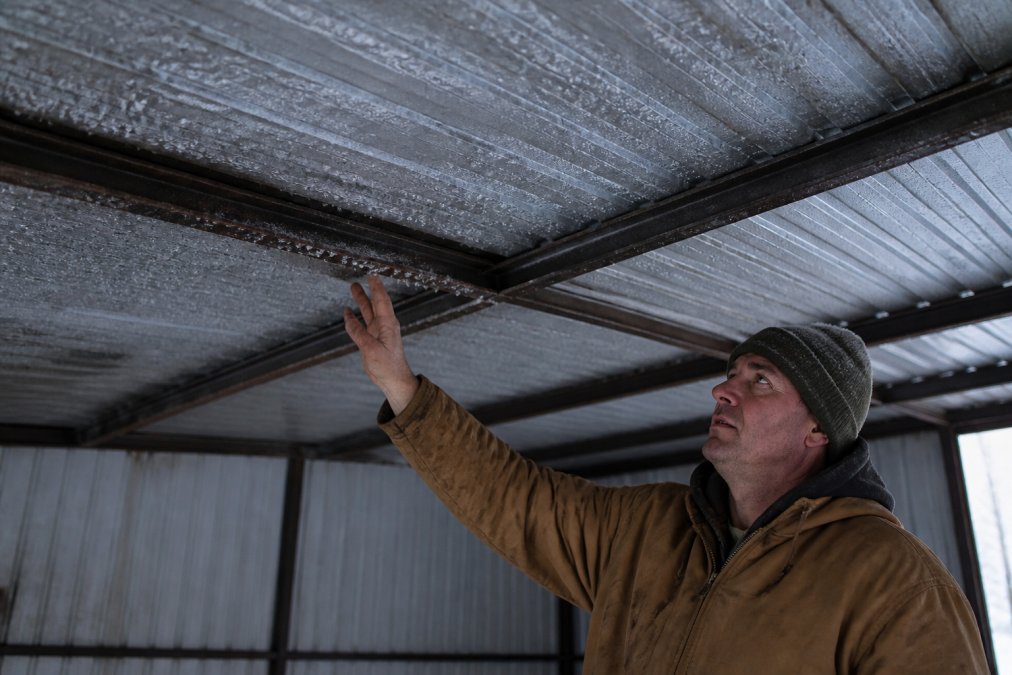
Preventing condensation in metal barns is mostly about stopping warm, moist air from touching cold steel. Condensation forms when interior air reaches its dew point on the underside of roof panels and purlins, and in winter that happens fast in a building with animals or equipment.
White 610 GSM PVC Replacement Main →
Cost to Insulate a Metal Workshop: Pricing Breakdown
The cost to insulate a metal workshop tracks three variables: square footage, material choice, and whether you hire out the labor. Material is usually the smaller line item once you factor in installation.
- Fiberglass batts and rolls: lowest material cost, highest labor per square foot
- Rigid foam board: moderate material cost, moderate labor, good moisture control
- Spray polyurethane foam: highest material and labor cost, best air sealing
- Insulated metal panels: high material cost, low labor on new builds
DIY vs. Professional Installation: Safety and Longevity
DIY versus professional installation is the decision most owners get wrong, and it usually comes down to the material rather than the budget. Fiberglass and rigid board are realistic weekend projects; spray foam is not. Winter timing adds risks most guides ignore, and those risks are where the real cost of a DIY mistake shows up.
Winter-Specific Safety Risks
Working at height on a metal roof in winter is a different job than the same work in July. Steel panels frost over, condensation freezes on purlins, and a surface that felt stable in fall becomes slick the moment temperatures drop below freezing. Most practitioners will not walk a metal roof in freezing conditions without fall arrest gear, and many contractors schedule roof work for warmer months.
Longevity: Why Detailing Beats Material
Longevity favors the professional job in most cases, not because the materials differ but because the detailing does. Sealed penetrations, taped seams, correctly tensioned facings, and a continuous vapor barrier keep insulation performing for a decade instead of a season. A contractor who does this daily gets those details right the first time; a first-time DIYer often discovers the gaps only after the first hard freeze, when condensation shows up on the purlins.
A Simple Decision Framework
- Fiberglass batts, walls and ceilings, mild weather: DIY is reasonable with full PPE and a sealed vapor barrier.
- Rigid foam board, continuous coverage: DIY is possible but seam taping and staggering take practice.
- Spray polyurethane foam: Hire out. Substrate temperature, cure time, and supplied-air requirements make this a professional job.
- Insulated metal panels, new construction: Usually installed by the erector; not a typical DIY project.
- Any roof work in freezing conditions: Hire out. Fall risk on frosted steel is the single biggest winter hazard in this list.
Vapor Barriers, Radiant Barriers, and HVAC Integration
Vapor barriers, radiant barriers, and HVAC integration work as one system, and treating them separately is why so many winter insulation jobs underperform. The vapor barrier controls moisture, the radiant barrier controls heat gain in summer, and the HVAC system must be sized for the envelope you actually built.
Conclusion
Insulating a metal building for winter is a moisture problem dressed up as a temperature problem, and the owners who get it right seal first and insulate second. Material choice matters, but the detailing decides whether it works.
Frequently Asked Questions
What is the best insulation for a metal building in cold climates?
Closed-cell spray polyurethane foam delivers the highest R-value per inch and doubles as a vapor barrier, making it the strongest choice for cold climates. Fiberglass batts with a facing and rigid foam board are lower-cost alternatives, but they need careful vapor barrier detailing to prevent condensation. For existing buildings, spray foam or rigid board avoids the compression problems that reduce batt performance.
How much does it cost to insulate a 40x60 metal building?
Costs vary by material and whether you hire a pro. Fiberglass batts are the cheapest material, while closed-cell spray foam costs the most per square foot. For a 40x60 building, expect a wide range depending on R-value target and labor. Always request a written quote that lists material, labor, and any travel fees before committing.
How does insulation prevent condensation in metal buildings during winter?
Insulation keeps the interior metal skin warmer, so moist air inside the building does not hit a cold surface and condense. A continuous vapor barrier on the warm side stops moisture from reaching the metal in the first place. Without both, you get dripping ceilings, rust, and soggy insulation, which is why preventing condensation in metal barns starts with sealing air leaks and installing a proper vapor barrier.
Can I install insulation in a metal building myself?
You can install fiberglass batts or rigid foam board yourself if you follow safety guidelines, but spray foam requires professional equipment and training. DIY saves labor costs but risks gaps, compressed batts, and missed vapor barriers that cut performance. If you are unsure about R-value requirements for metal buildings in your area or how to detail the vapor barrier, hiring a professional is the safer investment.