

Quick Summary
PE shelter covers are the lighter, lower-cost option, while PVC covers use a polyester scrim coated with vinyl for more body and tear strength. For pvc vs pe, PE suits mild sites with light equipment and tight budgets, and PVC suits heavy snow, strong wind, or sharp-edged equipment.
- A white 300 GSM PE replacement cover for a 20-foot-wide shelter is listed at $990.00.
- A 610 GSM PVC main cover for a 40' × 40' × 15' shelter is listed at $2,790.00.
- Listed prices cover only the replacement tarpaulin and securing ropes, not the frame or walls.
- Treat GSM as the primary fabric spec and confirm any ounce figures in writing with the supplier.
- A replacement cover restores the fabric barrier but does not extend the life of the frame underneath.
Table of Contents
- PVC vs. PE Container Shelter Panels Price: What You Actually Pay
- Container Shelter Fabric Weight: What GSM and Ounces Really Mean
- PVC vs. PE Shelter Fabric Durability Under Sun, Wind and Snow
- Container Shelter Panel Lifespan and Warranty Coverage
- Choosing Between PE and PVC for Your Climate and Equipment
- Choosing Your Replacement Cover or Shelter Next
- Frequently Asked Questions
What PE and PVC Shelter Panels Are Made From
Most buyers comparing container shelter covers want one answer first: which material will hold up on their land, and what it will cost to keep it that way. When it comes to shelter covers, pvc vs pe is the comparison most buyers face, and the two differ more than the price tag suggests. Polyethylene (PE) is a plastic polymer, typically woven into a flexible tarpaulin. Polyvinyl chloride (PVC) is a vinyl-based coated fabric that is usually heavier and stiffer.
PE covers are the lighter, lower-cost option. PVC covers use a polyester scrim coated on both sides with vinyl, which gives them more body and tear strength. Flint Hills Barns offers both materials for its replacement covers and double-truss shelters, so the pvc vs pe decision comes down to how the shelter will be used.
Keep the frame in mind too. The cover is only one part of the system. A sound steel frame, correct tensioning and secure container mounting do as much to protect what's underneath as the fabric itself.
PVC vs. PE Container Shelter Panels Price: What You Actually Pay
The sticker price is the starting point, not the full cost. Flint Hills Barns lists a white 300 GSM PE replacement cover for 20-foot-wide shelters at $990.00. Its 300 GSM PE replacement main cover for a 40' × 40' × 13' shelter is listed at $1,999.00. For a heavier 610 GSM PVC main cover on a 40' × 40' × 15' shelter, the listed price is $2,790.00.
Compare like sizes before deciding. The 40-foot PVC option costs more than the PE option, but it also carries a heavier fabric and a different height spec, so the two aren't a straight swap. Price matters less than whether the cover fits your existing frame.
Be aware of what these prices leave out. Each listing covers the replacement tarpaulin and securing ropes only. The frame, shipping containers, front and rear walls, doors and anchoring hardware are sold separately or not at all. Ask for a written quote that lists every component before you commit.
The listed prices for each option are below, though they cover only the replacement tarpaulin and ropes.
| Item | Price | Note |
|---|---|---|
| White 300 GSM PE cover, 20-foot-wide shelter | $990.00 | Replacement cover and ropes only |
| 300 GSM PE main cover, 40' × 40' × 13' shelter | $1,999.00 | Frame and walls sold separately |
| 610 GSM PVC main cover, 40' × 40' × 15' shelter | $2,790.00 | Different height spec than PE option |
Price
Container Shelter Fabric Weight: What GSM and Ounces Really Mean
Fabric weight is usually given in grams per square meter (GSM) or ounces per square yard. Higher numbers generally mean a heavier, sturdier fabric, but weight alone does not tell you how a cover will perform on a given frame. The useful question is how the fabric's weight and tensile strength translate into load on the frame, the attachment points and the ropes.
Here's where listings get confusing. Some suppliers also quote an ounce figure, such as "11 oz." or "22 oz.," next to the GSM number. Those two units don't convert neatly unless the measurement basis is stated. Flint Hills Barns lists its PE covers at 300 GSM and its PVC covers at 610 GSM, and notes that its ounce labels are pending confirmation. Treat GSM as the primary spec and ask the supplier to confirm the basis in writing.
How Fabric Weight Affects Frame Load
A cover's own weight is the smallest load on the frame. The larger forces come from wind pressure acting on the flat surface and from snow settling on the roof. A heavier fabric resists tearing and stretching under those forces, which reduces the chance that a single gust or snow event deforms the frame or pulls out a fastener. The trade-off is that heavier fabric is harder to tension by hand and places more sustained stress on tubing and connection points, so a heavier cover on a weak frame can be a worse choice than a lighter cover on a sound one.
In practice, this means matching fabric weight to the frame's rated capacity and the local wind and snow exposure. A lightweight PE cover on a well-braced frame in a sheltered site loads the structure very differently from a 610 GSM PVC cover on an exposed frame in a snow region. Ask your frame supplier whether the structure was engineered for the cover weight you plan to install.
Comparing Weights Within a Material
Use fabric weight to compare covers within the same material, not across materials. A 610 GSM PVC cover and a 300 GSM PE cover are not interchangeable, even when the shelter size matches, because coating, scrim and weave change how the fabric handles load at the same nominal weight. Within one material, a step up in GSM usually means better tear resistance and less sag between supports, which matters most where snow or wind pools on the roof.
Watch out: a heavier cover on an undersized or loosely tensioned frame concentrates stress at the corners and attachment points, so confirm the frame can carry the upgraded weight before ordering.
PVC vs. PE Shelter Fabric Durability Under Sun, Wind and Snow
Durability depends on the environment as much as the fabric. Sun, wind, snow load and temperature swings all work on a cover, and the right material depends on which pressure is strongest where you live.
No independent wind or snow-load rating was supplied for the replacement covers themselves. Ask the supplier for documentation before you rely on either.
Maintenance makes the biggest difference. Keep the cover taut, clear snow promptly, and retension after temperature changes. A loose tarp is what flaps, collects water and tears at attachment points.
UV Resistance and Fabric Degradation
Sunlight is the slow killer of every outdoor cover. UV exposure breaks down plastic fibers and coatings over time, making fabric brittle and chalky.
Read the warranty terms before you buy, since coverage depends on proper installation and maintenance.
Tear Resistance and Repairability
Tear resistance matters most where a cover rubs against sharp frame edges or gets caught by wind. PVC, with its polyester scrim and coating, generally holds up better to punctures and abrasion than lightweight PE.
Repairs are simpler than replacement but still need attention early. Small cuts and abrasion are easier to patch or address before they spread. Inspect the cover and ropes after severe weather, repair bent tubing and loose fasteners first, and keep spare securing ropes on hand.
Container Shelter Panel Lifespan and Warranty Coverage
A replacement cover restores the primary fabric barrier. It does not extend the life of the structure underneath.
That means you may replace a cover several times over the life of a single frame. Budget for periodic covers rather than expecting one purchase to last the whole structure's life. Read warranty terms carefully, since coverage depends on proper mounting, tensioning and maintenance.
Lifespan also depends on the accessories you add. Secure anchoring, quality ratchets and protected attachment points all reduce wear on the cover.
Choosing Between PE and PVC for Your Climate and Equipment
The right material depends less on a single rule than on the combination of climate, equipment and budget. Most buyers can narrow the choice quickly by working through the conditions that actually stress a cover.
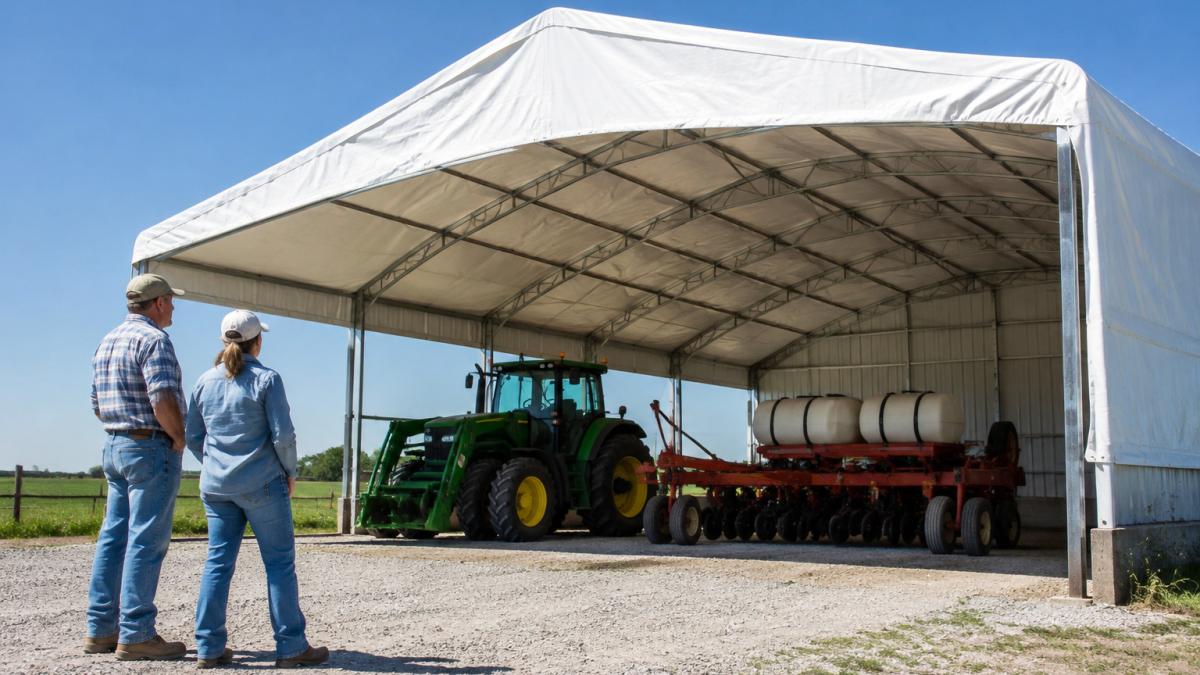
Best Fit for Mild, Sheltered Sites
Choose PE when budget is the main constraint and the shelter sits in a region with moderate sun, light winds and little snow. A 300 GSM PE cover is a practical, lower-cost renewal for a sound frame that houses lighter equipment, hay, vehicles or tools that do not need heavy protection. Plan to inspect it more often, because lighter fabric shows wear and sag sooner under intense sun.
Best Fit for Heavy Snow and Exposed Sites
Choose PVC when the shelter faces heavy snow loads, strong or gusting wind, or long hours of direct sun on an open property. The 610 GSM PVC option is listed for a 40' × 40' × 15' container shelter.
Best Fit for Heavy Equipment Storage
For machinery, large vehicles or equipment with sharp edges, PVC is usually the safer choice. If the shelter stores light items only, PE usually covers the need without the added expense.
A Quick Selector
- Mild climate, light equipment, tight budget: PE.
- Heavy snow, strong wind or high UV exposure: PVC.
- Sharp-edged or heavy equipment stored inside: PVC.
- Frame already undersized or in poor condition: fix the frame first, whichever material you choose.
Compatibility decides everything. Match the cover to your frame's manufacturer, model, dimensions and attachment points, not just the nominal size, and confirm these details before ordering.
Choosing Your Replacement Cover or Shelter Next
Start by measuring your existing frame and noting the make and model if you can find it. That single step prevents most fit problems. Then decide between renewing your current cover and buying a complete shelter.
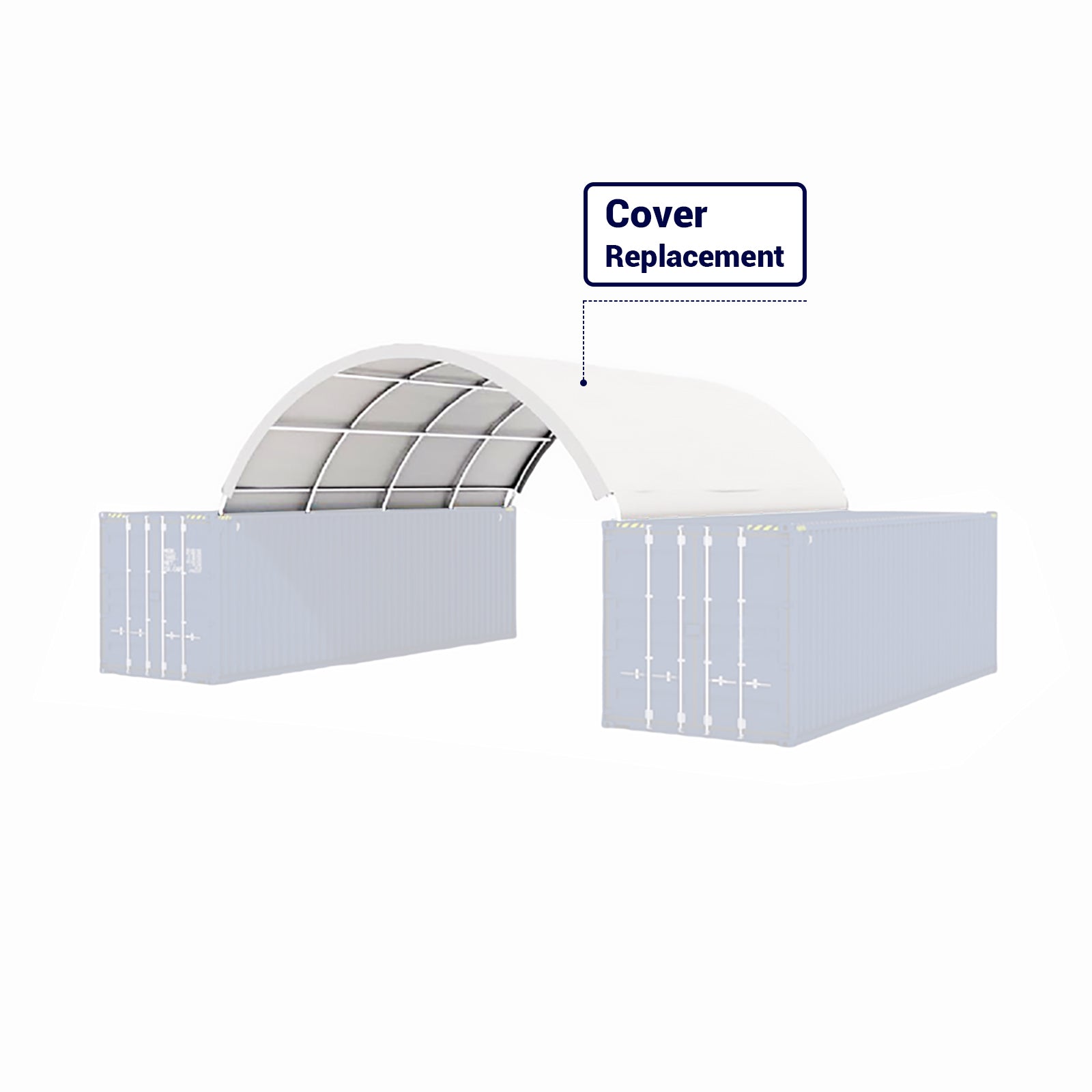
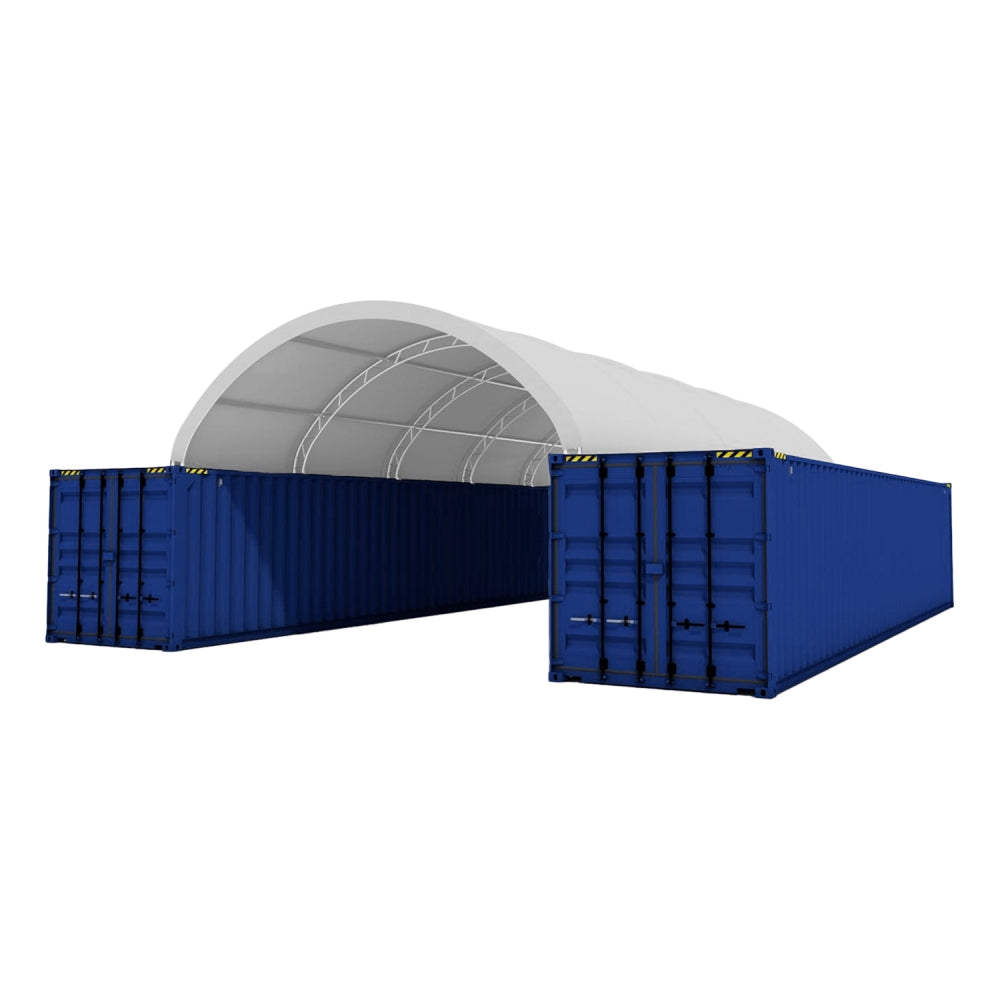
If your frame is sound, a replacement cover is usually the most economical move. If you need more covered space, the double-truss shelter lists about 800 square feet of protected area and assembly in roughly two days with a four-person crew.
Browse replacement covers for container shelters to see what fits your setup, or compare the double-truss shelter with PE or PVC covering to match a complete shelter to your needs. Flint Hills Barns is a veteran-owned business, and Bobby Payne can provide personalized quote assistance before you order.
Frequently Asked Questions
Which is better, PE or PVC, for a container shelter cover?
It depends on the job. PE is the lower-cost option and suits storage of equipment, materials and vehicles where budget matters most. PVC uses a heavier fabric, generally delivers more puncture and tear resistance, and carries a longer warranty. Choose PVC when you want a heavier-duty fabric; choose PE when budget is the main concern. Match the material to how hard the shelter will work.
How long do PVC and PE container shelter panels last?
Actual cover life depends on UV exposure, snow removal, wind events and how well the fabric stays tensioned.
What should I check when comparing shelter panel fabric weight?
Compare the GSM rating first, since it measures fabric weight per square meter. Some suppliers also list ounces per square yard, but the two are not interchangeable unless the basis is stated. Flint Hills Barns lists its PE covers at 300 GSM and its PVC replacement covers at 610 GSM. Confirm the rating and the shelter size before ordering, because matching nominal dimensions does not guarantee a proper fit.
Do I need to replace my whole shelter if the cover wears out?
Usually not. A replacement main cover restores the primary fabric barrier while the existing frame stays in service. Flint Hills Barns offers replacement covers for compatible 20' and 40' container shelters, including PE and PVC options, and notes that the package does not include the frame, containers or walls. Inspect the frame and anchors first, then confirm the original shelter model before ordering a replacement.
