

Table of Contents
- Armstrong Steel vs Rhino Buildings: What Ranchers Need to Compare
- Armstrong Steel vs Rhino Buildings Cost: What Drives the Final Number
- Metal Building Kit Warranty Comparison: What's Actually Covered
- Engineering, Stamped Plans, and Code Compliance
- Questions to Ask Metal Building Suppliers Before You Sign
- Steel Building Quote Checklist: Compare Apples to Apples
- Which Supplier Fits Your Ranch or Farm Project?
- Conclusion
- Frequently Asked Questions
Last Updated: October 5, 2026
Armstrong Steel vs Rhino Buildings: What Ranchers Need to Compare
When you're buying a metal building for your ranch, the Armstrong Steel vs Rhino Buildings decision usually comes down to three things: total installed cost, how the quote is structured, and whether the engineering actually matches your land.
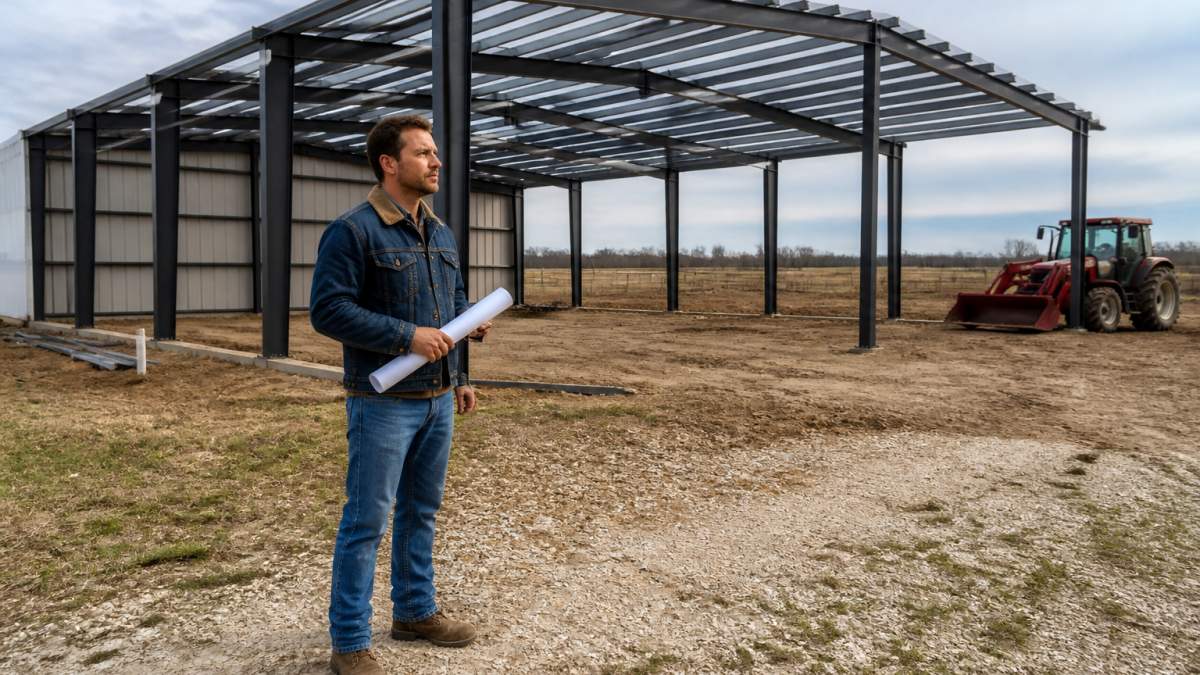
Here's the part most buyers miss: the sticker price on a metal building kit is rarely the number that matters. Freight, foundation work, erection labor, and permit documentation often add more to the final bill than the building itself.
Armstrong Steel vs Rhino Buildings Cost: What Drives the Final Number
The final cost of a metal building kit depends on four factors: building dimensions, framing system, accessories, and site conditions. Two suppliers can quote the same 40x60 structure and land thousands of dollars apart because they're scoping different things. The headline price is almost never the number you pay.
Why the Same Building Gets Three Different Quotes
A common mistake is assuming all quotes cover the same work. They don't. One supplier may include stamped plans and delivery; another may list them as add-ons. When comparing Armstrong Steel vs Rhino Buildings cost, ask each for a line-item breakdown: building package, freight, engineering, and any accessory pricing. Anything left off the quote is a cost you'll absorb later.
The Like-for-Like Quote Method
To compare two quotes fairly, you have to normalize them. Here is the method that works:
- Fix the dimensions and clear span. A 40x60 with a 12-foot eave is not the same as a 40x60 with a 16-foot eave. Confirm both quotes use identical width, length, and eave height.
- Confirm the design loads. Wind, snow, and seismic loads must match your site. A quote engineered for a lighter snow load is not the same building, even at the same dimensions.
- Match the framing system. Rigid-frame and other framing systems carry different steel weights and costs. Confirm both quotes specify the same system.
- List every accessory. Doors, windows, insulation, vents, and gutters must be itemized on both quotes. An accessory included by one supplier and omitted by the other is a hidden price difference.
- Add freight to both. Freight is distance-based. A rural ZIP code can push delivery costs higher than a suburban one. If one quote buries freight and the other lists it, add it to both before comparing.
- Add engineering and permits. Stamped plans and permit documentation are sometimes included and sometimes billed separately.
- Add foundation and erection. These are almost always excluded from the kit quote and quoted by third parties.
Only after all seven steps do you have a comparable number. That number is your total installed cost.
Total Installed Cost: The Number That Actually Matters
The kit price is one line in a larger budget. Total installed cost includes:
| Cost Category | Typically In Kit Quote? | What To Confirm |
|---|---|---|
| Building package | Yes | Dimensions, gauge, framing system |
| Freight | Sometimes | Distance, access, offloading |
| Foundation | Rarely | Soil, frost depth, local code |
| Erection labor | Rarely | Crew availability, timeline |
| Permits and engineering | Sometimes | Stamped plans, local jurisdiction |
| Insulation | Sometimes | R-value, vapor barrier |
| Doors and windows | Sometimes | Size, type, hardware |
| Site work | Rarely | Grading, access roads, utilities |
| Taxes | Rarely | State and local sales tax |
Scope Boundaries: What the Quote Does Not Say
The most expensive words in a metal building contract are the ones that aren't there. A quote that is silent on foundation design, erection, insulation, or site work is not a cheaper quote, it is an incomplete one. Ask each supplier to state in writing what is excluded. The supplier that lists its exclusions clearly is usually the one whose final invoice matches the quote.
A Note on Comparing Headline Prices
A lower headline price can reflect a lighter gauge, a smaller eave height, fewer accessories, or excluded freight. None of those are necessarily bad, but they are not the same building. Compare the normalized total installed cost, not the sticker. That is the only number that lets you judge Armstrong Steel vs Rhino Buildings value fairly.
Metal Building Kit Warranty Comparison: What's Actually Covered
A metal building kit warranty comparison should focus on three separate coverages: structural, paint, and panel finish. These are usually written as distinct terms with different durations and exclusions. Most buyers read the marketing summary and assume one warranty covers everything. It rarely does.
The Three Coverage Layers You Need to Separate
Structural warranty. This covers load-bearing components, columns, rafters, and primary framing, against manufacturing defects. Most manufacturers offer a multi-year structural warranty, though the exact duration varies.
Paint and panel finish warranty. This covers fading, chalking, and adhesion failure on painted steel. These warranties typically run shorter than structural coverage and often include a fade threshold, for example, coverage may only apply if fading exceeds a certain measured level.
Accessory and component warranties. Doors, windows, insulation, and fasteners often carry separate warranties from their own manufacturers. A building package warranty does not automatically extend to a garage door or a skylight panel.
Exclusions Matter More Than Duration
A 40-year paint warranty sounds stronger than a 25-year one until you read the exclusions. Common exclusions include:
- Hail, wind, and storm damage (often covered by insurance, not warranty)
- Improper installation or erection by an unapproved crew
- Damage from standing water, chemical exposure, or site-specific soil conditions
- Fading below the stated threshold
- Modifications made after delivery
Transferability and Proration
Ask two questions most buyers forget: Does the warranty transfer if you sell the property? And is coverage prorated? A prorated warranty pays less as the building ages, so a 30-year term may pay only a fraction of replacement cost in year 20. A non-prorated warranty holds full value for the term.
What to Request From Each Supplier
Request the full warranty document, not the summary, and check these items side by side:
- Structural coverage duration and what voids it
- Paint and panel fade threshold and duration
- Whether coverage is prorated or non-prorated
- Whether it transfers to a new owner
- Which accessories carry separate warranties
- The claims process and who pays labor
The Unique Angle: Warranty as a Quote Comparison Tool
Most comparisons stop at duration. A stronger approach is to treat the warranty document as a quote comparison tool. When you line up two quotes, attach each warranty and compare the exclusions, proration, and transferability side by side. A supplier confident in its product will send the full document without hesitation. A supplier that sends only a marketing summary is telling you something about how it handles the rest of the project.
Engineering, Stamped Plans, and Code Compliance
Stamped plans are engineering drawings signed by a licensed professional confirming the structure meets local building codes for your site. Without them, your permit application stalls.
Design loads drive everything here. Wind load, snow load, and seismic requirements vary enormously by region. A building engineered for one part of the country may not meet code where you live. Confirm that the supplier's engineering accounts for your specific ZIP code, not a regional average. For reference, the International Code Council building codes publishes the model codes most jurisdictions adopt, and your local building department has the final say.
Questions to Ask Metal Building Suppliers Before You Sign
Ask these before you sign anything. The answers will tell you more than any brochure.
- Who stamps the engineering drawings, and are they licensed in my state?
- Is freight included, and what's the delivery timeline in writing?
- What's the deposit amount, and is it refundable?
- What are the payment milestones, and what triggers each one?
- Which accessories are included versus added later?
- What's the structural warranty duration, and what voids it?
- Can you confirm availability for my ZIP code before I commit?
The deposit and refund questions matter most. A refundable deposit protects you if lead times slip or the design changes. A non-refundable deposit ties your money up before you've seen final drawings.
Steel Building Quote Checklist: Compare Apples to Apples
Use this checklist to line up quotes side by side. It's the fastest way to spot the real differences.
- Building dimensions and clear-span width confirmed
- Framing system specified (rigid-frame vs. other)
- Gauge and steel components listed
- Roof system and wall panels described
- Insulation included or priced separately
- Doors, windows, and accessories itemized
- Foundation requirements stated
- Freight cost and delivery timeline in writing
- Stamped plans and permit documentation included
- Structural warranty terms attached
Contract Terms, Deposits, and Payment Milestones
Payment milestones should tie to real progress: deposit, engineering approval, delivery, and completion. If a contract front-loads payment before drawings are approved, that's a red flag. Ask what happens if the delivery timeline slips. A supplier confident in its schedule will put dates in writing.
| Milestone | Typical Trigger | What To Verify |
|---|---|---|
| Deposit | Order placement | Refundable? Amount? |
| Engineering | Stamped plans delivered | Licensed in your state |
| Delivery | Kit arrives on site | Date in writing |
| Final payment | Completion | Inspection passed |
Which Supplier Fits Your Ranch or Farm Project?
Neither Armstrong Steel nor Rhino Buildings is automatically the right call. The better fit depends on your site, timeline, and how transparent each quote is.
This is where Flint Hills Barns fits. We're a veteran-owned business that works with rural property owners, farmers, and ranchers on custom metal structures. Bobby Payne handles personalized quote assistance, and we confirm ZIP-code specific availability through our regional manufacturing partnerships before you commit.
The Federal Trade Commission guidance on buying and contracts is worth reading before you sign any building contract, especially on deposit and cancellation terms.
Conclusion
Comparing metal building suppliers is really a test of how clearly each one communicates. Ask for line-item quotes, full warranty documents, and stamped plans naming your site's loads. The supplier that answers without hesitation is usually the one worth your money.
At Flint Hills Barns, we built our process around that transparency: personalized quote help from Bobby Payne, ZIP-code specific availability confirmation, and custom designs for barns, workshops, and livestock shelters. Request personal quote help and get a clear written quote for your project.
Frequently Asked Questions
Are Rhino steel buildings any good?
Rhino Buildings offers pre-engineered steel structures with clear-span framing and a range of customization options for agricultural and commercial use. Whether it's the right fit depends on your building dimensions, local wind and snow loads, and how the quote handles freight, foundation, and erection. Ask for stamped engineering drawings and a written structural warranty before you commit, and confirm the supplier services your ZIP code.
How do Armstrong Steel and Rhino Buildings compare on warranties?
Both companies publish warranty terms, but the details differ on what's covered and for how long. Look at three things: the structural warranty period, paint and panel finish coverage, and whether labor or freight is included in a claim. Request the full warranty document, not just the summary page, and check whether the coverage transfers if you sell the property later.
What should I compare in metal building quotes?
Compare more than the bottom-line number. Ask each supplier to itemize steel components, roof system, wall panels, insulation, doors and windows, accessories, freight costs, and whether erection is included. Check design loads for your area, lead time, deposit amount, and payment milestones. A quote that looks cheaper up front often excludes foundation requirements or site preparation, which changes the total project cost significantly.
How do I choose a metal building for a farm or ranch?
Start with how you'll use the structure: livestock shelter, equipment storage, or both. That determines clear-span width, eave height, and whether you need open bays or enclosed walls. Then confirm the building meets local building codes for wind load, snow load, and seismic requirements in your area. Get at least two itemized quotes, verify the supplier's delivery timeline for your ZIP code, and ask for references from similar agricultural projects.